How to Winterize Raised Garden Beds Before Frost
7 min read
The first hard freeze does not need to turn your garden into a weekend emergency. To winterize raised garden beds well, focus on the few decisions that protect next season's soil and remove problems before they settle in for winter. Most gardens need an hour or two, not a complete fall makeover.
Start with your forecast, not the calendar. A raised bed can cool faster than in-ground soil because cold air reaches it from the sides. But an early light frost is different from a hard freeze, and a wet bed needs different attention than one that has been dry for weeks. Let the weather decide what happens first.
How to Winterize Raised Garden Beds in the Right Order
Begin with crops that are still producing. Harvest ripe tomatoes, peppers, beans, squash, basil, and tender herbs before the first frost. Pick tomatoes that have reached full size and let them finish ripening indoors. Dig potatoes and sweet potatoes before soil becomes consistently cold and wet.
Do not rush to clear every green plant after one chilly night. Kale, spinach, carrots, lettuce, parsley, and many brassicas can handle light frost, often with improved flavor. Check the variety if you know it, then leave healthy cold-tolerant crops in place until they stop growing or you need the bed for a cover crop.
Next, remove plants that are finished, diseased, or heavily pest-damaged. Pull spent tomato vines, cucumber plants, squash vines, and anything with recurring powdery mildew, blight, leaf spot, or severe insect damage. Do not compost visibly diseased foliage at home unless you know your pile gets hot enough to break down pathogens. Bag it or use your local yard-waste collection instead.
Healthy, disease-free material is different. Chop it into smaller pieces and add it to a compost pile, or use small amounts as mulch. The goal is not a spotless bed. It is a bed without a winter shelter for pests and disease.
Check the bed before you cover it
Take five quiet minutes to inspect the soil surface. Look for exposed irrigation lines, labels worth saving, volunteer seedlings, weeds that have gone to seed, and clumps of roots left from summer crops. Pull weeds now, especially bindweed, nut sedge, crabgrass, and any weed carrying mature seed heads. One overlooked seed head can create a much larger spring job.
If you had a disease problem, note which bed and which crop were involved. Crop rotation is more useful when it is specific. Moving tomatoes to another bed next year may help, but it will not solve every issue if the cause was poor airflow, inconsistent watering, or infected transplants.
Feed Soil Without Overworking It
Raised-bed soil loses organic matter over time. Harvesting crops removes nutrients, while warm weather speeds decomposition. Fall is a good time to replenish the top layer, but avoid treating every bed as though it needs the same amendment.
For most established vegetable beds, spread 1 to 2 inches of finished compost over the surface after clearing crops. You can gently work it into the top few inches, but deep turning is rarely necessary. Leaving deeper soil layers relatively undisturbed protects structure, earthworm channels, and the soil life that helps water move through the bed.
If your soil test shows a specific deficiency, apply the recommended amendment rather than guessing. Wood ash, for example, can raise pH quickly and should not be spread casually. High-nitrogen fertilizer is also usually the wrong fall move. It can encourage tender growth that winter weather will kill, and nutrients may wash away before spring planting.
A bed that grew heavy feeders such as corn, tomatoes, peppers, or squash may benefit from compost plus a cover crop. A bed that held herbs or leafy greens may need only compost and mulch. The practical question is simple: what did this bed produce, and what are you planting there next?
Consider a cover crop if the bed will stay open
Cover crops are useful when a bed will sit empty for several months. They hold soil in place, reduce erosion, suppress winter weeds, and add organic matter when cut down in spring. In many US regions, oats, cereal rye, winter wheat, crimson clover, and field peas are common choices, but timing and winter hardiness vary by location.
Planting a cover crop is worthwhile if you can seed it early enough for roots to establish and you are willing to terminate it before it sets seed. If a hard freeze is only days away, or you know spring schedules are packed, compost and mulch are the lower-maintenance choice. A neglected cover crop can become one more task at exactly the busy time of year.
Mulch for Protection, Not Perfection
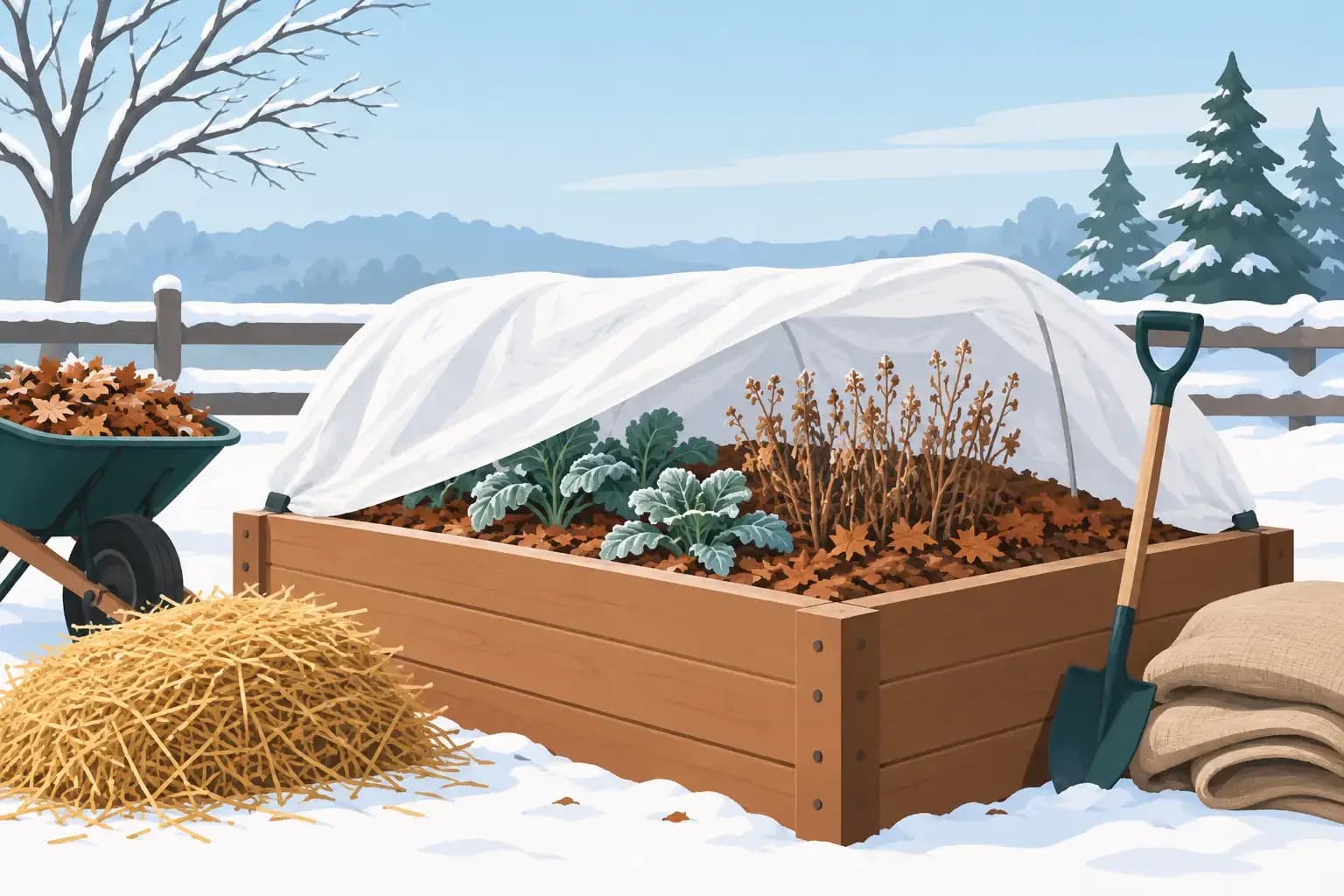
Once the bed is cleared and amended, cover bare soil. Mulch buffers temperature swings, reduces weed germination, slows erosion from winter rain, and protects the compost layer from splashing away.
Use 2 to 4 inches of clean straw, shredded leaves, pine needles, or untreated leaf mulch. Shredded leaves break down faster and are easy to source, though whole leaves can mat into a soggy layer that sheds water. Straw is light and effective but may carry weed seeds if it is poor quality. Avoid hay, which commonly contains seeds.
Keep mulch a few inches away from crowns of perennial herbs and vegetables. Rosemary, lavender, thyme, asparagus, and strawberry crowns can rot when mulch stays packed against them in wet climates. In colder areas, a loose insulating layer can still help after the ground begins to freeze, but moisture management matters as much as insulation.
Do not use landscape fabric as a default winter cover for vegetable beds. It can trap debris, complicate spring planting, and provide little benefit compared with compost plus organic mulch. A tarp may be helpful briefly to prevent a bare bed from becoming waterlogged, but it should not be your season-long plan unless drainage is already a known issue.
Water Before a Freeze, Then Stop Guessing
Dry soil is more vulnerable to temperature swings than evenly moist soil. If the forecast calls for a freeze and your beds are dry, water the soil thoroughly earlier in the day. Moist soil holds heat better than dust-dry soil, which can provide a little protection for roots and winter vegetables.
That does not mean soaking every bed before every cold night. Skip watering if recent rain has already moistened the root zone, if the bed is frozen, or if drainage is poor. Raised beds usually drain well, but a clogged bottom layer or compacted mix can leave roots sitting in cold water.
Disconnect hoses before freezing weather arrives. Drain timers, drip lines, and watering wands if temperatures are expected to stay below freezing. If you use a rain barrel, follow its winterization guidance for your climate. A cracked fitting is an unnecessary spring repair.
Protect What Will Keep Growing
Cold-hardy crops need protection from sudden temperature drops, wind, and freeze-thaw cycles. Use frost cloth, row cover, or a low tunnel over spinach, lettuce, Asian greens, carrots, beets, kale, and other crops you intend to harvest into winter. Secure the edges so wind cannot lift the cover and let cold air sweep underneath.
The material matters. Lightweight row cover may buy a few degrees of frost protection, while heavier frost cloth provides more insulation but allows less light and airflow. On sunny days, check low tunnels and covered beds. Temperatures can rise quickly under plastic, even when the outside air feels cold.
For tender plants such as basil and peppers, covering is usually a short-term tactic, not a way to extend the season indefinitely. Harvest what you can, then clear those plants after a killing frost. Save your effort for crops with a realistic chance of continued harvest.
Make Spring Easier Before You Walk Away
Winterizing works best when you leave behind a simple record. Take a photo of each bed after cleanup, note what grew there, and write down any pest, disease, or drainage issue. Label garlic plantings, perennial herbs, and overwintering crops clearly. Spring beds can look surprisingly similar after months of rain, wind, and leaf drop.
This is also a good time to inspect bed boards, corner brackets, trellises, and irrigation. Tighten a loose screw now. Remove brittle tomato twine. Store stakes and tools where they will not sit in snow or standing water. Small maintenance jobs are easier when you are not also trying to transplant tomatoes on a warm April afternoon.
Tomatograph can help turn local frost risk, crop stages, and your bed notes into a short weekly plan, so the next task is clear: cover the greens tonight, drain the hose tomorrow, or mulch the empty bed this weekend.
A well-winterized bed does not need to look empty or picture-perfect. It needs protected soil, a plan for the crops still standing, and no hidden mess waiting for you when spring arrives. Give it that, then let the garden rest.