Best Frost Protection Materials for Home Gardens
6 min read
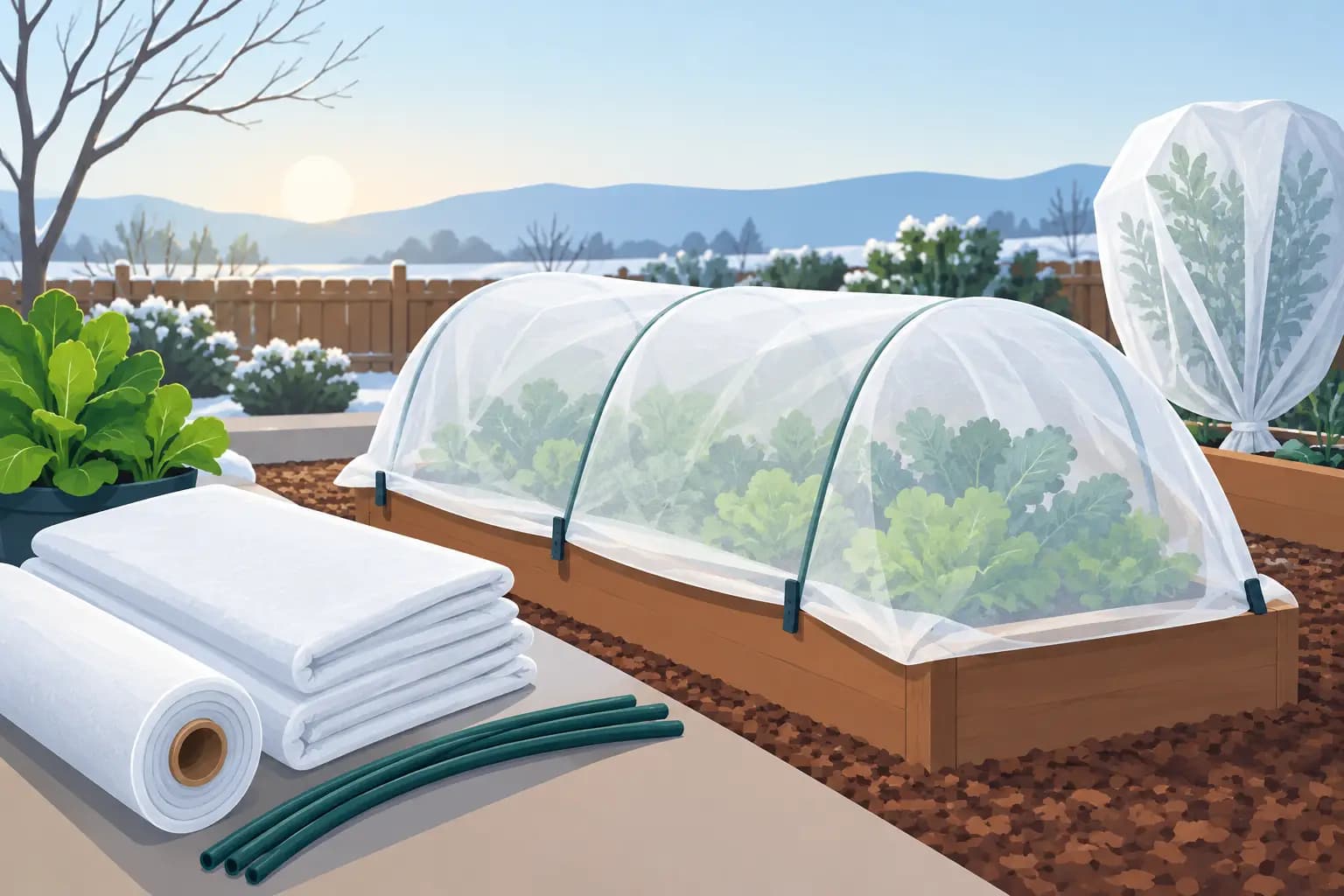
A 34°F forecast does not mean every plant needs the same treatment. Basil can be lost in one cold night while kale barely notices, and a damp bed in a low spot may freeze before the temperature at the airport says it should. The best frost protection materials are the ones that match the plant, the forecast, and the few minutes you actually have before dark.
For most home gardens, the goal is not to build a fortress around every bed. It is to trap a small amount of ground heat, block cold air, and keep tender leaves from touching frost. Start with the crops that need saving tonight. Then choose the lightest material that gives enough protection.
Best Frost Protection Materials by Job
Frost cloth and floating row cover
Frost cloth, often sold as garden fabric or floating row cover, is the most useful all-purpose choice for vegetable beds. It lets in air and water, is light enough to rest directly on many plants, and usually protects crops by a few degrees. Heavier grades provide more protection, though they also admit less light and airflow.
Use it for lettuce, peas, broccoli, cabbage, carrots, beets, and established herbs that can handle light cold but benefit from a buffer. A light cover may be enough for a brief 32°F night. For a forecast in the upper 20s, use a heavier fabric or double up if the plants have room beneath it.
Anchor the edges completely with soil, boards, rocks, or landscape staples. This matters more than making the cover look tidy. Cold air slips under loose edges and carries away the warmth stored in the soil. If the material is likely to sit on tomatoes, peppers, or taller greens, lift it over hoops to avoid crushing stems and breaking brittle leaves.
Old sheets, blankets, and towels
Clean cotton sheets, lightweight blankets, and towels are effective in a short-notice frost emergency. They are especially good over a tomato cage, a young citrus tree, a pepper plant, or a container grouping near the house. Their dense weave holds warmth better than a thin bed sheet alone, but they get heavy when wet and should not stay on for days.
Avoid using anything that has oil, paint, or chemical residue. Keep heavy blankets off delicate plants by draping them over stakes, chairs, cages, or hoops. If the material touches foliage for one night, it is usually not a disaster, but a wet, heavy covering can damage soft growth.
Remove these covers in the morning once temperatures rise above freezing. Plants need light and airflow, and damp fabric can encourage disease if left in place. Fold and store dry covers where you can reach them quickly. Frost protection works best when it is a routine, not a midnight scavenger hunt through the linen closet.
Clear plastic, used as an outer layer
Plastic sheeting is useful, but it is commonly used in the wrong place. It blocks wind and sheds rain, yet it does not breathe. Plastic touching leaves can transfer cold directly to the tissue, and sunlight can turn a covered plant dangerously hot even on a chilly morning.
Use clear plastic over a frame, hoop tunnel, or tomato cage, ideally with frost cloth or a sheet beneath it. Think of it as a rain-and-wind shell, not the layer that belongs against the plant. Leave room for air between the plastic and foliage, seal it near the ground overnight, and vent or remove it early the next day.
Plastic earns its place during a hard freeze, cold wind, or several wet nights when fabric alone may become saturated. It is also practical for protecting a small raised bed when a sudden freeze arrives before you have built a proper low tunnel. Just do not leave it closed on a sunny day.
Cloches, buckets, and milk jugs
For a handful of seedlings or newly planted warm-season crops, individual covers are often faster than covering a whole bed. Upside-down buckets, nursery pots, clear storage bins, and cut gallon milk jugs can hold enough heat to protect one plant overnight.
Opaque buckets are fine for a single night because protection matters more than light. Clear jugs are better for a cold spell, but they need a cap removed or a vent hole during the day. Push the edge slightly into the soil or weigh it down so wind cannot turn your protection into yard litter.
This approach is best for a few tomato, pepper, cucumber, melon, or basil plants. It becomes inefficient when you have twenty plants to cover. At that point, a shared hoop tunnel with row cover is calmer and more reliable.
Mulch for roots, not leaves
Straw, shredded leaves, pine needles, and untreated wood chips protect soil and roots. They are valuable around garlic, strawberries, perennial herbs, and fall-planted crops, especially where repeated freezing and thawing can heave plants out of the ground.
Mulch is not a substitute for a cover over tender foliage. A tomato plant can still freeze above a beautifully mulched root zone. But for crops that can regrow from protected crowns, or for soil that needs to hold warmth and moisture, a two- to four-inch layer does real work.
Keep mulch a little away from stems to reduce rot and discourage rodents from nesting beside your plants. For cold-sensitive annuals, wait until after the frost event to mulch heavily if the ground is still trying to absorb daytime warmth.
Match the Material to the Forecast
A light frost and a hard freeze call for different decisions. Check the predicted low, but also look at wind, cloud cover, recent soil moisture, and where your garden sits. Clear, still nights are classic radiation-frost conditions: heat rises from the soil and surfaces cool quickly. Low pockets, open lawns, and beds away from walls can run colder than the forecast.
If the low is 33°F to 36°F, cover basil, peppers, tomatoes, eggplant, cucumbers, beans, and tender annual herbs. Established lettuce and brassicas usually need less attention, although young transplants are more vulnerable. A single layer of frost cloth or a sheet over the tender section is usually enough.
At 28°F to 32°F, use heavier row cover, double layers, or fabric under a framed plastic shell. Bring containers close to the house, where masonry and siding release a little stored heat. Move basil, tropical herbs, and small citrus indoors if you can. Do not count on a porch alone unless it is enclosed or consistently warmer.
Below 28°F, focus on what has the best chance of being saved. Harvest ripe tomatoes, peppers, basil, beans, and tender herbs before covering. A temporary tunnel can help, but a prolonged hard freeze may overwhelm fabric protection. In an unheated greenhouse, add row cover inside the structure and use jugs of water to add thermal mass. The water will not perform miracles, but it can soften a brief overnight temperature drop.
The Setup That Makes Covers Work
Water the soil earlier in the day if it is dry and conditions allow. Moist soil stores more heat than dusty soil, then releases it overnight. Do not soak foliage late in the afternoon, and do not water when the soil is already saturated or a freeze will create hazardous ice around paths.
Cover before sunset. Once the soil has already lost its daytime warmth, a cover has less warmth to hold. Build low tunnels and gather weights during mild weather, especially if you garden after work. Fifteen quiet minutes at 5 p.m. is easier than trying to secure flapping fabric with a flashlight at 10 p.m.
In the morning, wait until the frost has thawed before handling frozen leaves. They are fragile and can bruise or tear. Then uncover fabric once temperatures are safely above freezing, particularly if sun is out. If a cold day will stay near freezing, breathable row cover can remain in place, but check that plants are not being flattened and that the material stays secured.
A Simple Frost Kit for Busy Gardeners
Keep one folded roll of frost cloth or row cover, a few clamps, landscape staples or boards, and several buckets or milk jugs near the garden. Add a couple of hoops if you regularly grow tomatoes, peppers, or early spring transplants. This small kit covers most short cold events without turning frost preparation into a major project.
The material matters, but timing matters just as much. Watch the forecast for the coldest night, protect the tender crops first, and remove covers when the morning warms. A garden does not need constant worry to get through a frost. It needs the right help before the temperature drops.