Lawn Mower Height Guide for a Healthier Lawn
7 min read
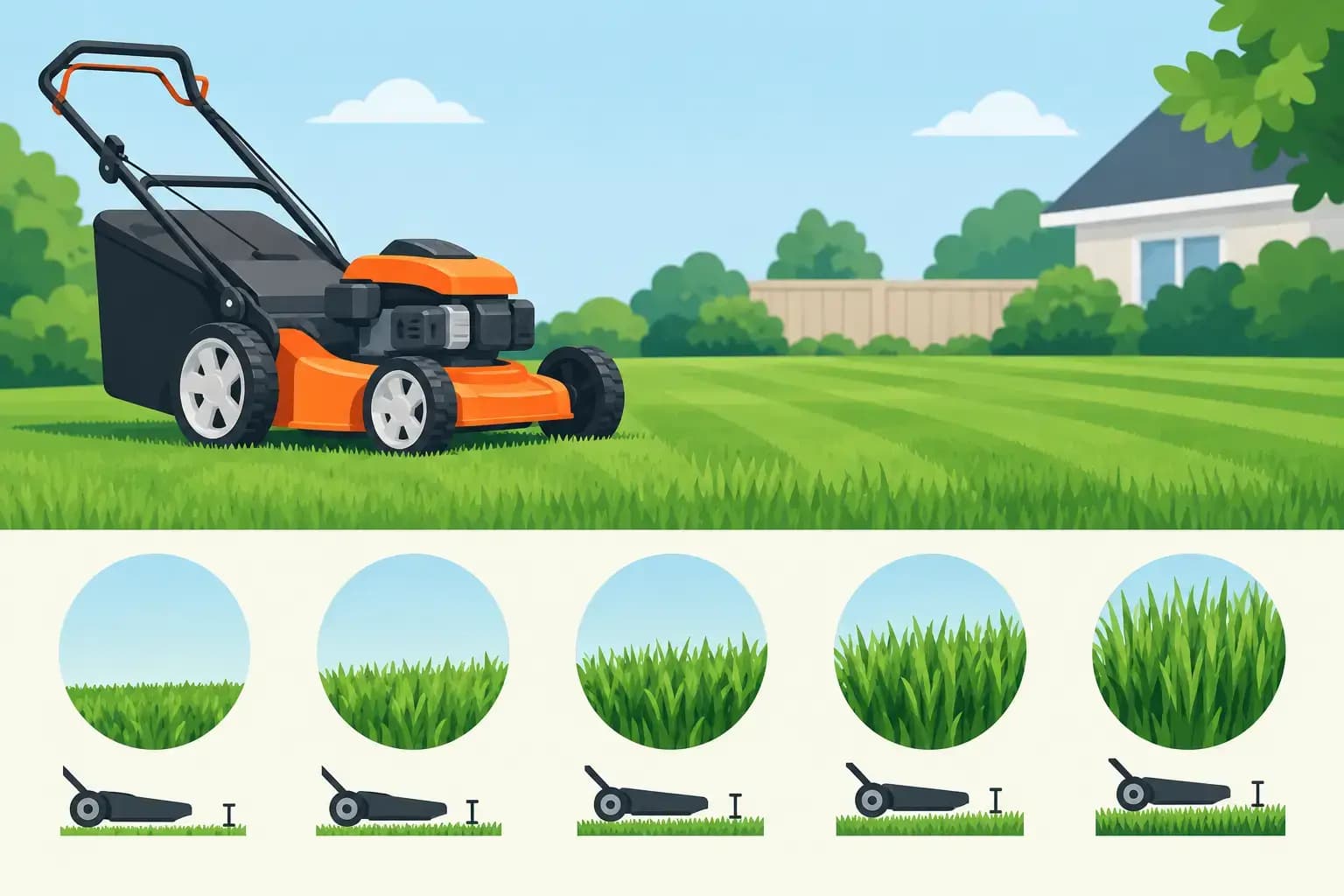
A mower set one notch too low can turn a good lawn into a stressed, thirsty patch in a single Saturday afternoon. This lawn mower height guide helps you make the cut that fits your grass, your weather, and the condition of the yard right now. The goal is not a golf-course look. It is a lawn that stays dense enough to crowd out weeds, shade its own soil, and recover from family life.
Why mowing height changes the whole lawn
Grass is not just the part you see above the soil. Each blade gathers energy for the roots below it. Cut too much leaf tissue at once and the plant has less energy to maintain those roots, withstand heat, and fill in thin spots.
A low cut can look tidy for a few days, but it often creates more work afterward. The soil dries faster, summer weeds find open space, and the lawn may need more frequent watering. Scalping is especially rough on uneven ground, where the mower deck shaves high spots nearly bare.
A slightly taller cut usually produces a calmer, more durable lawn. Taller grass shades the root zone, holds moisture longer, and gives cool-season turf a better chance during hot spells. The trade-off is simple: it may need mowing a little more often during fast spring growth. That is generally easier than repairing stressed turf in August.
Lawn mower height guide by grass type
Start with the grass you have, not the height that looks best in a neighbor's yard. Warm-season grasses grow most actively in late spring and summer. Cool-season grasses peak in spring and fall, then slow down in heat.
If you are not sure what is growing in your lawn, look at its behavior. A lawn that greens up early in spring and stays green later into fall is often cool-season turf. One that turns tan after frost and wakes up when the weather warms is generally warm-season turf. Mixed lawns are common, particularly in transition-zone states, so choose a middle-ground setting rather than chasing a perfect number.
| Grass type | Typical mowing height | | --- | --- | | Kentucky bluegrass | 2.5 to 3.5 inches | | Tall fescue | 3 to 4 inches | | Fine fescue | 2.5 to 4 inches | | Perennial ryegrass | 2 to 3 inches | | Bermudagrass | 1 to 2 inches | | Zoysiagrass | 1 to 2.5 inches | | Centipedegrass | 1.5 to 2 inches | | St. Augustinegrass | 3.5 to 4 inches | | Bahiagrass | 3 to 4 inches | | Buffalograss | 2 to 4 inches |
These ranges assume a typical home lawn and a rotary mower. Reel mowers can maintain lower-cut warm-season turf, especially bermuda and zoysia, but they require a smoother surface and more frequent mowing. Do not lower a rotary mower simply because a grass type can tolerate a shorter height under professional conditions.
For a lawn with several grass types, set the mower around 3 inches unless you know that a lower-growing warm-season grass is dominant. That height is forgiving, practical, and suitable for many residential yards.
Measure the mower instead of trusting the dial
The numbers on a mower deck are not standardized. A setting marked 3 on one mower may cut at 2 inches, while another may cut close to 3.5 inches. Park the mower on a flat driveway, measure from the hard surface to the bottom edge of the blade area, and adjust all four wheels evenly.
Check the height after changing blades, replacing wheels, or switching mowers. It takes two minutes and prevents a season of mowing too low by accident.
Raise the deck when the lawn is under pressure
Your ideal mowing height is a range, not a fixed command. Use the lower end when grass is actively growing, the lawn is level, and you can mow often enough to remove only a little at a time. Move toward the higher end during stress.
Raise the deck by about a half-inch when a heat wave arrives, rainfall has been scarce, or the lawn is growing in partial shade. A tall fescue lawn at 4 inches in July may look a little less formal than one at 3 inches, but it will usually need less water and recover more easily from foot traffic.
Shade deserves special attention. Grass under mature trees competes with roots for water and nutrients while receiving fewer hours of sun. Mow that area higher than the open lawn if your mower allows it. If it remains thin despite a higher cut, the problem may be insufficient light rather than poor mowing.
In fall, continue mowing at the normal height until growth slows. Avoid dropping the deck for a final close cut. Short grass does not become winter-ready by being shaved down. For cool-season lawns, a normal or modestly lower final mow can help reduce matting, but a severe cut weakens the plant when it needs energy reserves.
Follow the one-third rule, especially in spring
The most useful mowing rule is to remove no more than one-third of the grass blade in a single pass. If you want a 3-inch lawn, mow when it reaches roughly 4 to 4.5 inches. If it has reached 6 inches after a rainy week, do not cut it straight back to 3 inches. Take off part of the height, then mow again a few days later.
This is where a calendar can mislead you. A lawn does not grow on a seven-day schedule. Cool, rainy weather may mean no mowing is needed for two weeks. Warm rain in late spring can mean it needs attention twice in one week. Let the grass height and forecast set the timing.
Keep mower blades sharp. Torn grass tips turn brown, making a lawn look dull even when the height is right. Ragged cuts also create more stress during hot weather. Sharpen or replace blades when you see shredded ends, uneven cutting, or long strips of uncut grass left behind.
When growth is normal and the lawn is dry, leave short clippings on the grass. They return a modest amount of nutrients and do not cause thatch. Bag clippings only when they are so heavy that they clump and block light, or when you are cleaning up after an overgrown lawn. If disease is actively spreading, bagging can be sensible, but correct the underlying issue too: poor airflow, prolonged leaf wetness, too much irrigation, or grass being cut too short.
Mow around weather, not against it
Avoid mowing saturated soil. Wheels compact wet ground, ruts form easily, and blades can tear grass rather than cut it cleanly. If rain is coming later today, mow now only if the lawn is dry enough and you can finish before the shower. Otherwise, wait for the surface to dry.
During drought, mow only when the grass has grown enough to justify it. Grass that has gone dormant may not need mowing at all. Keep the deck high, avoid heavy traffic, and do not try to force green growth with extra mowing. Dormant turf can recover after rain if the crowns and roots remain healthy.
Before a hot, dry weekend, raise the deck rather than giving the lawn a close clean-up. Before a stretch of cool, wet weather, mow at the normal height and make sure clippings are not smothering the surface. Small decisions like these protect the lawn without adding another big project to your weekend.
A weather-aware lawn plan, such as the one Tomatograph builds around local conditions, can be especially useful in spring and during heat swings. The question is rarely whether your lawn needs mowing at some point. It is whether mowing tonight helps it or adds stress it does not need.
What to do if you cut the lawn too short
A scalped lawn can look alarming, but most established turf will recover. Do not try to fix it with a second pass or an immediate heavy fertilizer application. Raise the mower to the high end of the recommended range and let the grass rebuild leaf area.
Water deeply only if the lawn is dry and local watering rules allow it. Avoid frequent shallow watering, which encourages weak roots. Keep foot traffic off the most damaged sections for a week or two, and watch for exposed soil where weeds may germinate. If bare spots remain after the weather becomes favorable for your grass type, then consider overseeding cool-season lawns or plugging warm-season turf.
The next time you mow, take only a small amount off. A lawn recovers through steady, low-stress care, not by catching up all at once.
Set your mower once, then adjust it when the lawn gives you a reason: a heat alert, fast spring growth, a shady stretch, or a dry forecast. That one quiet check before you start can save water, prevent weeds, and leave you with a lawn that asks less of you next week.