What Causes Lettuce Bolting Early? Stop It
5 min read
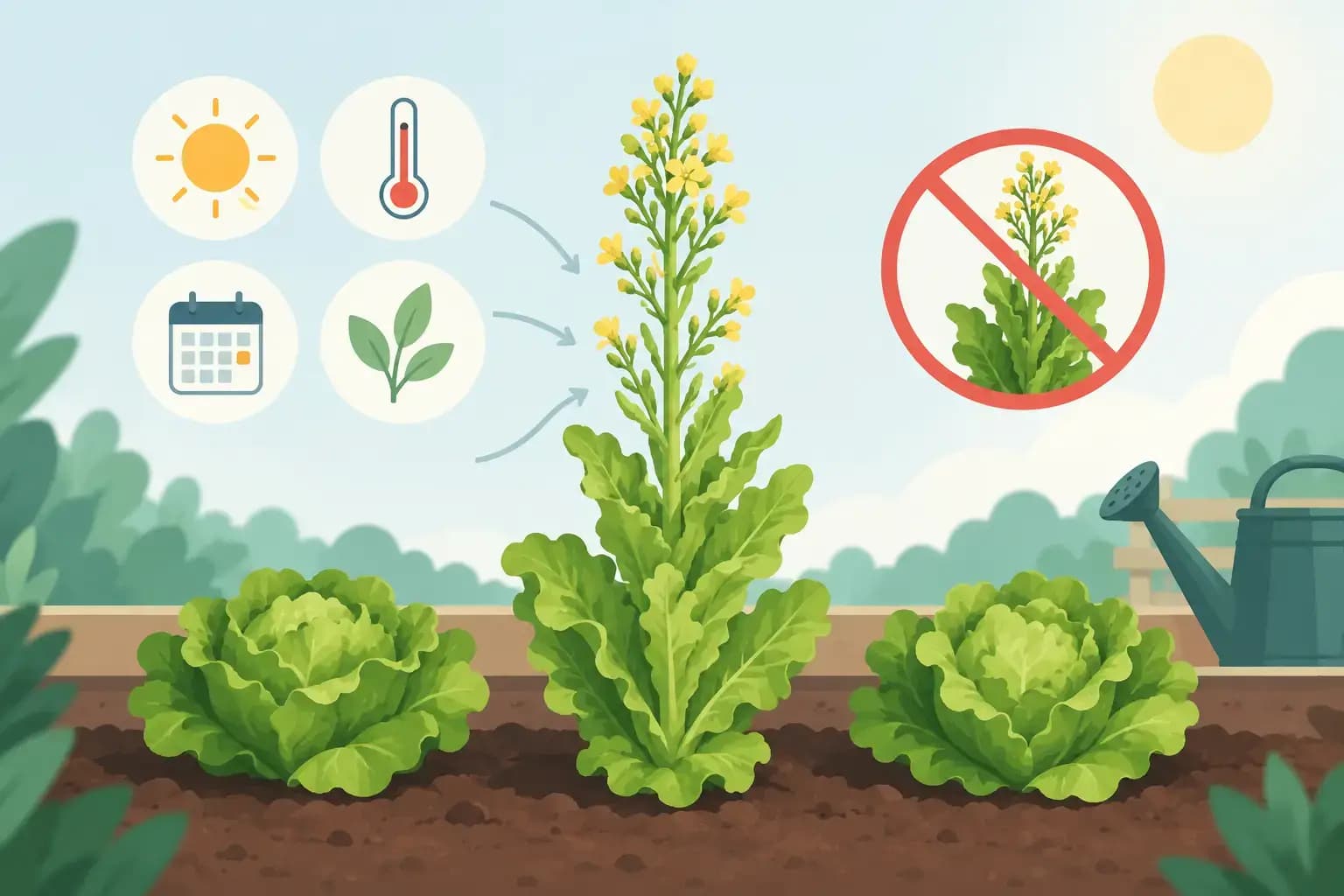
A lettuce plant can look perfectly healthy on Monday, then send up a thick center stem by the weekend. If you are asking what causes lettuce bolting early, the short answer is stress combined with warm, lengthening days. Once that center stalk starts stretching, the plant has shifted from making leaves to making seed. You cannot reverse it, but you can still salvage the bed and keep the next planting on track.
Bolting is normal lettuce behavior, not a failure on your part. Lettuce is a cool-season crop. Its job is to grow leafy rosettes in mild weather, then flower when conditions signal that summer is arriving. The goal is not to keep lettuce alive forever. It is to give it steady, cool conditions long enough to harvest a full crop of sweet leaves.
What causes lettuce bolting early?
Warm temperatures and increasing day length are the main signals. Most lettuce begins to feel pressure as daytime temperatures regularly move above 75°F, especially when nights stay warm too. A few hot afternoons will not always trigger bolting, but heat that persists for a week can move things quickly.
Day length matters because lettuce naturally responds to the approach of summer. That is why a planting that was productive in April may bolt in late May even if you have watered faithfully. Heat speeds up that response. In a warm spring, lettuce may bolt weeks earlier than expected.
Some varieties are simply more willing to hold in the garden than others. Looseleaf lettuces often let you harvest over a longer period, while certain romaine, butterhead, and crisphead varieties can be quicker to form a stalk when stressed. Seed packets sometimes describe a variety as slow-bolting or heat tolerant. That does not mean heat-proof. It means you may get a little more harvest time before the plant switches gears.
Heat is the usual trigger, but stress adds momentum
A hot bed is the most common reason for early bolting, particularly in raised beds and containers. Raised soil warms sooner than in-ground soil, and dark pots can become much hotter than the air around them. A lettuce plant against a sunny fence may experience a very different afternoon than one planted on the east side of the garden.
If a warm spell is coming, give established lettuce temporary afternoon shade. Shade cloth works well, but a patio umbrella, lightweight fabric, or a taller neighboring crop can help in a pinch. The point is not to put lettuce in deep shade all day. It still needs enough morning light to grow. You are reducing the hard afternoon heat that tells the plant summer has arrived.
For a quick check, step outside around 4 p.m. and feel the soil a few inches from the plant. If it is hot and dry, that bed needs attention before the next warm stretch. Ten quiet minutes spent watering deeply and setting up shade can buy you several more harvests.
Uneven watering can push lettuce over the edge
Lettuce has shallow roots and large, water-filled leaves. It does poorly when soil swings from soaked to bone dry. Drought stress alone can encourage bolting, and drought followed by heavy watering is still stressful for the plant.
Water early in the day and aim for consistently moist soil, not a saturated bed. In sandy soil, containers, and raised beds, that may mean checking moisture daily during warm weather. Mulch helps keep the root zone cooler and slows evaporation. A light layer of clean straw, shredded leaves, or untreated grass clippings is enough. Keep mulch slightly away from the plant crown so it does not stay constantly damp.
Rain changes the plan. If the bed received a real soaking rain, skip routine watering and check the soil before adding more. Lettuce needs steady moisture, not a calendar-based watering habit.
Root stress and crowding also matter
Lettuce transplants can bolt early when they have been rootbound in small cells, allowed to dry out repeatedly, or set into the garden during a hot spell. Older transplants may look sturdy at the garden center, but a plant that has spent too long in its pot can be more eager to flower.
Plant young, healthy starts and water them in immediately. For direct-seeded lettuce, thin seedlings promptly. Crowded plants compete for moisture, light, and nutrients, while restricted airflow increases disease pressure. Give leaf lettuces roughly 6 to 8 inches of space, and allow more room for heading types according to the variety.
Cold stress can be part of the story too. Young lettuce exposed to prolonged cold temperatures may receive an early signal that it has passed through winter. When warm weather follows, some plants bolt sooner. This is more likely with very early transplants than with seed sown after the harshest weather has passed. A light frost is often manageable, but repeated cold exposure calls for a row cover or a delay in transplanting.
What to do when lettuce starts bolting
First, harvest what is still good. Leaves often become more bitter as the stalk lengthens, but younger outer leaves may still be pleasant, especially if picked in the morning. Taste one before pulling the whole plant. If the flavor is too sharp for salad, use the leaves in a cooked dish where bitterness is less noticeable.
Then decide whether the plant is worth keeping. A clearly stretching center stem will not return to compact leaf growth. Pull it, compost it if it is healthy, and free the space for a warm-season crop or another succession sowing in a cooler spot. If you want to save seed, keep one healthy, non-hybrid plant and let it flower away from the main bed. For most busy gardeners, though, clearing it is the simpler choice.
Do not try to solve bolting with a heavy dose of fertilizer. Nitrogen can encourage leafy growth when a plant is still actively vegetative, but it will not cancel the flowering signal. Overfeeding can create soft growth and add another variable to an already stressed bed.
Plan for a longer lettuce season
The best defense is timing. Sow small amounts every two to three weeks rather than planting every seed at once. If one planting bolts during a heat spike, the next may still be at a useful harvest stage. For many US gardens, spring lettuce is a race to harvest before sustained heat arrives, while fall lettuce is often the easier, longer season.
Choose varieties for the season you actually have. In regions with fast-warming springs, prioritize slow-bolting leaf varieties and grow them where they receive morning sun and afternoon protection. In cooler climates, you may have more flexibility, but containers and south-facing beds can still overheat.
Keep simple notes on when each variety was planted, when hot weather arrived, and when bolting began. A garden plan based on your own yard is more useful than a generic planting chart. Tomatograph can help turn local weather and crop stage into a short weekly priority list, so a coming heat spell becomes a shade-and-water task instead of a surprise.
Lettuce bolting is a seasonal signal, not a reason to abandon the bed. Harvest the good leaves tonight, protect the plants that still have time, and plant the next round with a cooler window in mind.