What Plants Need Frost Protection? A Clear Plan
6 min read
A forecast low of 34°F can still mean trouble in a backyard garden. Cold air settles into low spots, clear skies let heat escape quickly, and the temperature at leaf level may dip below freezing before the official reading does. Knowing what plants need frost protection lets you handle the plants that matter tonight instead of covering every bed in a rush.
The short answer: protect tender, warm-season plants first. Cool-season vegetables can usually stay put. But the right decision depends on the plant, its growth stage, whether it is in a container, and whether the forecast calls for a light frost or a hard freeze.
What plants need frost protection first?
Start with plants that evolved for warmth and stop growing, discolor, or die when temperatures approach freezing. In an edible garden, that usually means tomatoes, peppers, eggplants, basil, cucumbers, squash, melons, beans, sweet potatoes, and okra. Tender annual flowers such as impatiens, marigolds, petunias, and begonias also belong in this group.
Basil is the plant to watch most closely. It can suffer chilling injury well above 32°F, often turning dark and limp after a cold night. If the forecast is below 40°F, bring potted basil inside or cover it early. A mature tomato plant may tolerate a brief 34°F night under a good cover, but exposed foliage can still be damaged.
Young transplants deserve extra attention. A newly planted pepper or cucumber has less root mass, less stored energy, and little protection from surrounding foliage. One cold night may not kill it outright, but it can set growth back for weeks. If you have fifteen minutes before sunset, cover the youngest warm-season plants first.
Containers are another priority. Their roots are surrounded by a thin wall of soil, not the insulating mass of a garden bed. Move pots of tender herbs and vegetables against a sheltered wall, under a covered porch, or indoors when possible. A garage works for one night if it stays above freezing and the plant is not left there for days.
Plants that usually do not need a cover
Many cool-season crops are built for chilly weather. Lettuce, spinach, kale, chard, arugula, peas, radishes, turnips, carrots, beets, broccoli, cabbage, cauliflower, and onions generally tolerate a light frost. In fact, cold can improve the flavor of kale, carrots, and some brassicas by helping them convert starches into sugars.
That does not mean every cool-season plant is equally tough. Small lettuce seedlings can be damaged by a hard freeze, and cauliflower heads may need protection if you want unblemished harvests. Still, when time is limited, do not spend it covering established kale while your peppers are exposed.
Perennial herbs need a closer look. Chives, thyme, sage, oregano, and mint handle cold far better than basil. Rosemary is less predictable, especially in exposed locations or containers. Its winter survival depends on the variety, drainage, wind exposure, and how cold your area gets, not just one overnight low.
Light frost or hard freeze? The forecast changes the job
A light frost occurs when temperatures briefly reach about 32°F, often on a calm, clear night. It may burn exposed leaves but leave protected plants and soil mostly intact. A simple fabric cover can make the difference.
A hard freeze is more serious. Several hours below 28°F can damage stems, roots in containers, fruit, and even plants that made it through a lighter frost. Row cover, blankets, or sheets help, but they are not a guarantee in a deep freeze. For tender plants in pots, moving them is more reliable than adding another layer outside.
Also pay attention to the weather pattern. A cloudy, breezy night at 33°F may cause less frost than a clear, still night with the same forecast. Wind can reduce frost settling in some situations, but it also strips warmth from covers and foliage. Low-lying beds, open lawns, and spots beside fences where cold air collects often run colder than the forecast suggests.
How to protect plants before sunset
The goal is to trap warmth rising from the soil. Put covers on before the garden loses that heat, ideally in late afternoon. A cover thrown over plants at 10 p.m. after the ground has cooled does less good.
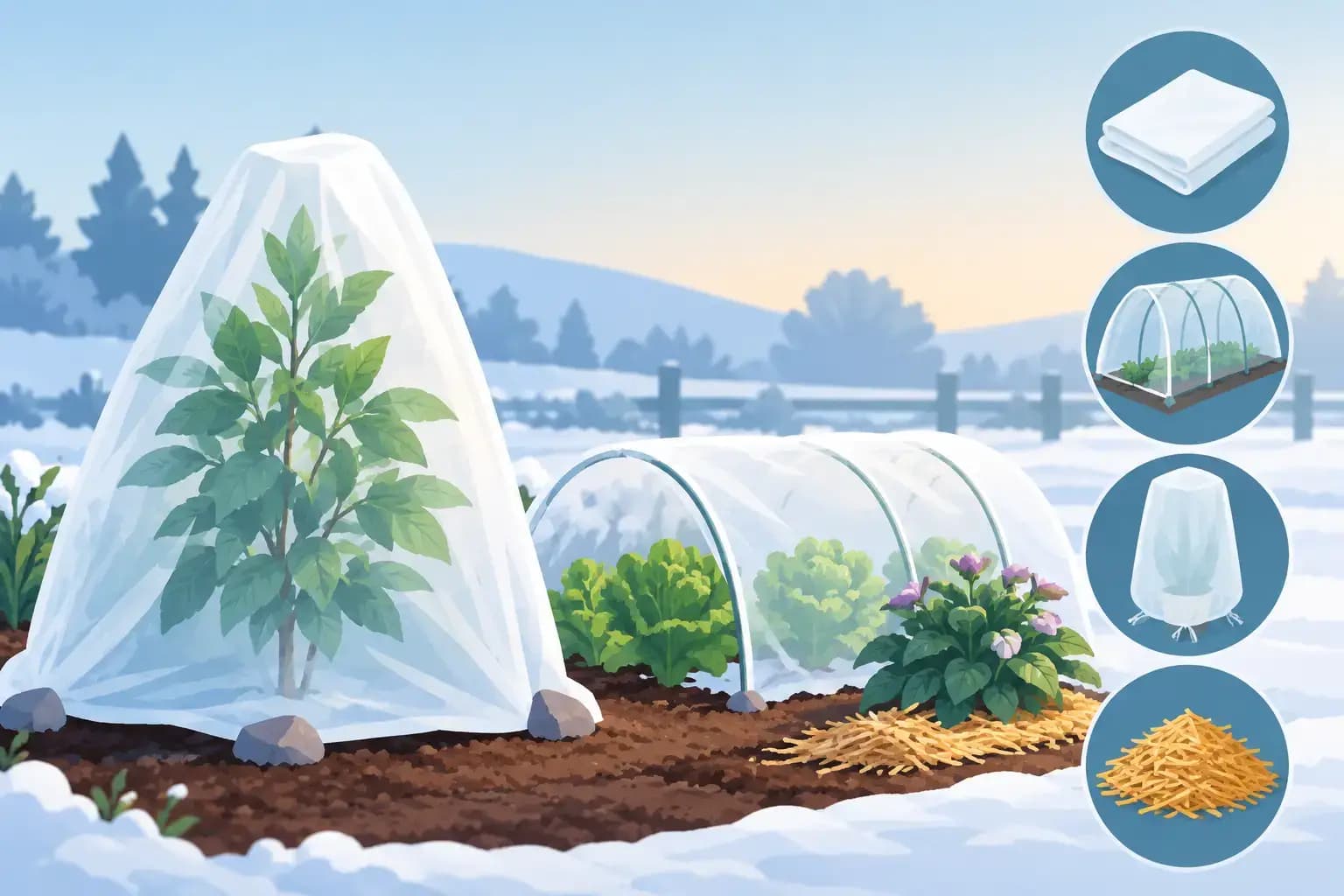
Use frost cloth, floating row cover, old sheets, lightweight blankets, or cardboard boxes for individual plants. Drape the material all the way to the ground and secure the edges with bricks, boards, clips, or soil. The cover should create a tent that holds ground warmth, not sit tightly on leaves. Lightweight row cover can rest on foliage for a short night, but a simple hoop or stake support is safer for brittle plants.
Avoid plastic directly on leaves. Where plastic touches foliage, cold can transfer through the material and leave burned spots. If plastic is all you have, place fabric between it and the plant, support it above the foliage, and secure it well against wind. Remove or vent plastic in the morning because sunlight can heat the space beneath it surprisingly fast.
For small plants, an upside-down nursery pot, bucket, or cardboard box can work during a light frost. Set it over the plant before dark and add a stone on top so it stays put. Take it off after temperatures rise in the morning. Do not leave a solid cover on through a sunny day.
Water can help, but it is not a substitute for covering tender crops. Moist soil holds more daytime heat than dry soil, so watering the soil earlier in the day can slightly improve overnight protection. Do not soak plants late at night, and do not rely on overhead sprinklers unless you understand active frost irrigation. That method requires continuous, carefully managed water application and can cause more damage if stopped at the wrong time.
Protect the harvest, not just the plant
Sometimes the best frost plan is to pick what is ready. Harvest ripe tomatoes, peppers, beans, cucumbers, basil, and summer squash before a freeze. Green tomatoes can finish ripening indoors if they have reached full size and have begun to lighten in color. Basil can be picked, used fresh, or turned into pesto before cold damages the leaves.
This is especially useful late in the season. Covering one or two productive tomato plants through a light frost may buy you another week or two of harvest. Covering a sprawling, disease-stressed plant before a hard freeze may not be worth the effort. Choose based on the crop's condition, the forecast, and what you realistically have time to protect.
If a cold night catches you off guard, wait until the plant thaws before judging the damage. Frost-blackened leaves may look dramatic at sunrise, but pruning immediately can expose living tissue to another cold night. Once temperatures stabilize, remove soft, collapsed foliage and assess the stems. Firm green tissue may still recover.
A quick frost checklist for busy evenings
When an alert comes in, make decisions in this order:
- Move tender potted plants inside or into a sheltered space.
- Harvest ripe warm-season produce and basil.
- Cover peppers, tomatoes, eggplants, cucumbers, squash, and young transplants.
- Add a second layer or use a better shelter if a hard freeze is expected.
- Leave established kale, spinach, peas, carrots, and other cold-tolerant crops uncovered unless the freeze will be prolonged.
- Remove covers after the morning warms, especially plastic or heavy fabric.
Build a calmer frost routine
The easiest frost response is the one you prepared before the forecast turned urgent. Keep a labeled tote near the garden with row cover, clips, bricks, stakes, and a few old sheets. Know which beds hold tender crops and which containers can be moved quickly. A simple garden log makes this easier next season: note which low spots frost first and which covers actually protected your plants.
Tomatograph can turn an incoming cold night into a focused task list based on what is growing in each bed, so “cover or bring in the basil before Thursday night” replaces a late scramble through generic advice. But the core habit is simple: check the low, protect the tender plants before sunset, and let the cold-hardy crops do what they are built to do.
Frost will always be part of growing outdoors. A few prepared materials and one calm decision about what deserves attention tonight can protect weeks of work.