Save Herbs Before a Freeze: 30-Minute Plan
6 min read
A forecast of 32°F does not mean every herb needs the same response. Basil can be badly damaged by a chilly night well above freezing, while thyme and sage may barely notice a light frost. The fastest way to save herbs before a freeze is to sort them by tenderness, then spend your limited evening time on the plants that will actually lose leaves, flavor, or their entire season.
Start before sunset if you can. Dry foliage is easier to harvest and cover, and a cover traps more of the soil's daytime warmth when it goes on before the ground cools.
First, read the forecast that matters
Check the predicted low, but do not stop there. A clear, calm night creates more frost risk than a cloudy or breezy night at the same forecast temperature. Low spots in the yard, exposed raised beds, and containers on a deck often run colder than the number reported for town.
Treat a forecast of 36°F or lower as a prompt to act for warm-season herbs. If the forecast calls for 32°F or below, assume tender herbs left outside are at risk. A hard freeze, generally around 28°F or lower for several hours, is a different event: covers can help marginal plants, but harvesting becomes the priority.
The goal is not to perform a perfect fall cleanup. It is to make the one or two decisions that protect the most useful plants tonight.
Save herbs before a freeze by sorting them into three groups
Bring these inside or harvest them heavily
Basil is the urgent one. It dislikes cold even before frost arrives, and blackened leaves after a 38°F night are common. Bring potted basil indoors, ideally to a bright window, or harvest most usable stems before the cold arrives. Do not expect a row cover to make basil reliably happy through a true freeze.
Also prioritize lemon verbena, pineapple sage, stevia, and other tender, warm-climate herbs. If they are in pots, move them into a garage, enclosed porch, shed, or indoors before dark. A protected garage is enough for one night if the temperature stays safely above freezing there, though it is not a long-term growing location.
If these herbs are planted in the ground and cannot be moved, harvest now. Cut healthy stems in the late afternoon after dew has dried. Leave a little foliage if you plan to cover the plant, but do not save every leaf for later at the expense of losing the best ones tonight.
Cover and watch these herbs
Parsley, cilantro, dill, chives, and young oregano can usually handle a light frost better than basil. Still, they benefit from protection if you want to keep harvesting. A frost cloth, old sheet, or lightweight blanket can preserve tender new growth and buy time.
Use stakes, hoops, tomato cages, or overturned chairs to keep fabric from crushing the plants. Drape the cover all the way to the soil and secure the edges with rocks, boards, or clips. The trapped ground warmth is what provides protection, so a cover that leaves open gaps at the bottom does much less.
Remove the cover in the morning once temperatures rise above freezing. Fabric left on during a warm, sunny day can trap heat and moisture. Never lay plastic directly on foliage. Where plastic touches leaves, cold transfer and condensation can cause the very damage you are trying to avoid.
Leave these outside, with reasonable expectations
Established thyme, sage, rosemary, winter savory, and many types of oregano are relatively cold-tolerant. Mint usually survives cold weather by dying back and returning from the roots in spring. Chives often do the same.
That does not mean every plant is equally hardy. A rosemary in a small terra-cotta pot is far more exposed than one planted in a sheltered bed. A newly planted sage has less established root mass than a mature clump. Containers lose heat from all sides, while garden soil holds warmth longer.
Move potted Mediterranean herbs against a house wall, out of wind, and group the pots together. Wrap the pot, not the plant, with burlap, a blanket, or an old towel if a hard freeze is expected. Avoid watering simply because cold weather is coming. Wet, waterlogged soil is not protective for herbs that prefer drainage. Water only if the soil is genuinely dry and the ground is not frozen.
The 30-minute frost routine
When the evening is busy, use this order. It prevents the familiar problem of spending twenty minutes searching for covers while the basil is still outside.
First 10 minutes: Bring in tender potted herbs. Move basil, lemon verbena, and other warm-season pots to a protected spot. If indoor space is limited, save the healthiest, most productive plants first.
Next 10 minutes: Harvest. Take basil leaves and stems, then collect parsley, cilantro, dill, and any herbs that are at peak quality. Skip yellowed, diseased, or insect-damaged foliage. You are preserving good flavor, not storing a problem.
Final 10 minutes: Cover herbs you want to keep growing outdoors. Secure covers at soil level, then move remaining pots close together and out of the wind.
If you have only five minutes, bring in basil and harvest what will not fit. That is the highest-value move for most backyard herb gardens.
Preserve the harvest without turning it into another project
A large harvest does not need an elaborate preservation weekend. Choose the method that matches the herb and the time you have.
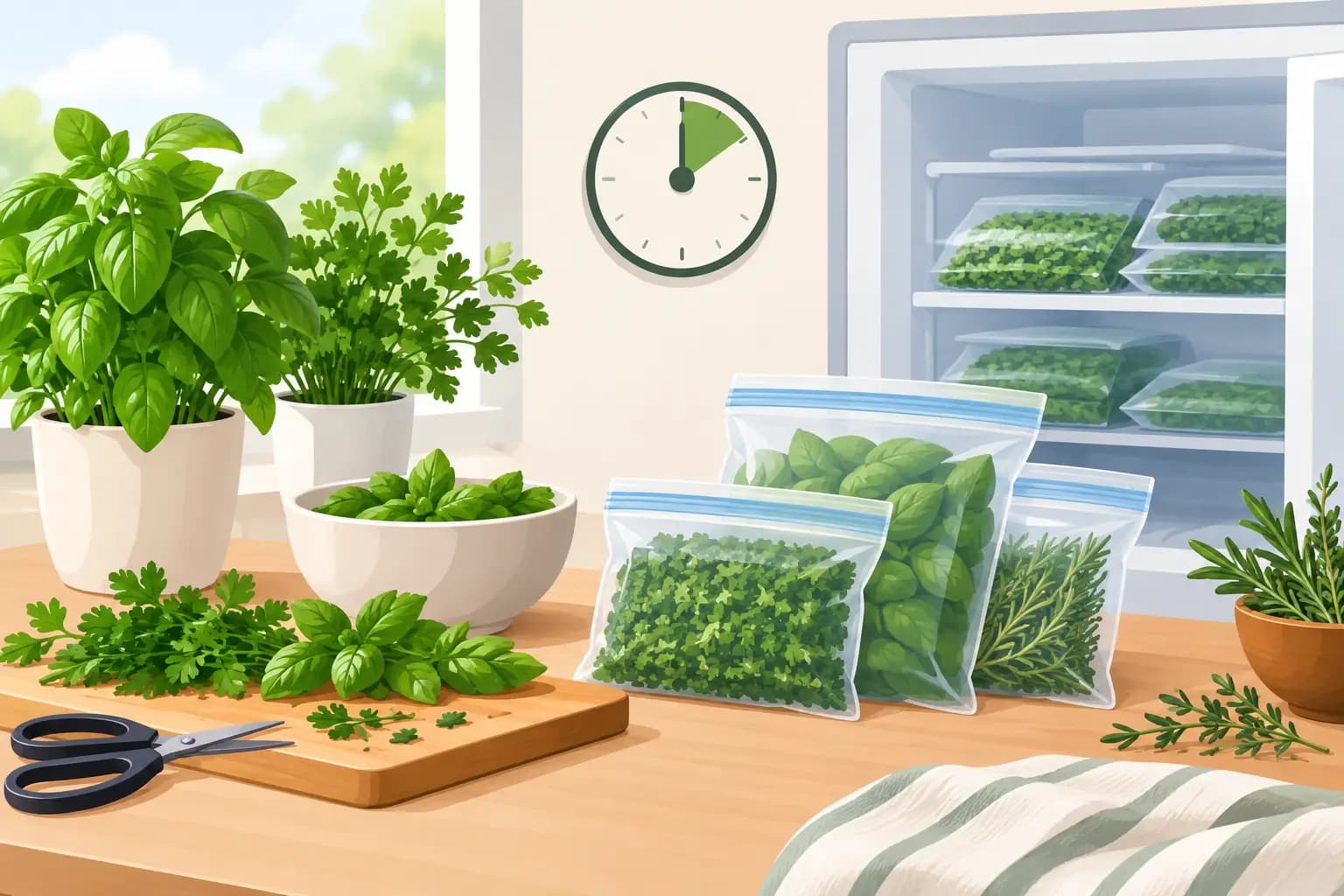
For basil, parsley, cilantro, chives, and dill, freezing usually keeps flavor better than drying. Rinse only if needed, then dry thoroughly. Chop the herbs, pack them into an ice-cube tray, cover with water or olive oil, and freeze. Once solid, move the cubes to a labeled freezer container. Oil cubes are convenient for soups, eggs, sauces, and sautéing, but use them from the freezer rather than storing them at room temperature.
For rosemary, thyme, sage, and oregano, drying is often the simpler choice. Tie small bundles and hang them in a warm, dry, shaded place with airflow, or spread leaves loosely on a screen or tray. Store them only when they crumble cleanly between your fingers. A jar of partly damp herbs can mold quietly and ruin the batch.
You can also make a practical kitchen bundle: chop several compatible herbs, freeze them flat in a labeled bag, and break off a handful for roast chicken, potatoes, or beans. Label every container with the herb and month. Six weeks from now, green frozen leaves can look surprisingly alike.
What to do after the cold night
Do not judge the plants at sunrise. Frosted leaves can look limp, dark, or water-soaked while they are still frozen. Wait until the plant has thawed and the day has warmed. Then remove clearly damaged foliage with clean scissors.
For basil, severe blackening usually means the outdoor season is over. Harvest any remaining good leaves, compost the damaged plant, and make a note for next year: basil needs protection at the first cold warning, not only at the first freeze.
For parsley, cilantro, chives, and hardy perennials, a little leaf damage does not always mean the plant is lost. Give them a few days, keep the soil moderately moist but not saturated, and watch for new growth. Avoid fertilizing stressed plants right after a freeze. Recovery comes from stable conditions, not a sudden push of fertilizer.
Make the next frost warning easier
The best frost plan is one you can carry out after work without hunting through the garage. Keep a dedicated bin near the garden with frost cloth, clips, bricks or landscape staples, plant labels, and a pair of pruners. Store a few freezer bags or containers in the kitchen for quick harvests.
It also helps to record which herbs were planted where and which containers are most exposed. A forecast is useful, but your own yard tells the final story. If the back corner of a raised bed frosts first or a porch pot stays warmer near the wall, that is the kind of local detail that turns a generic weather alert into a calm, specific action.
A freeze warning does not require panic or a full garden overhaul. Bring in what is tender, harvest what is ready, cover what has a reasonable chance, and let the hardy herbs do what they were built to do. Fifteen focused minutes tonight can keep summer flavor on your table well into winter.