How to Protect Seedlings Overnight From Cold
6 min read
A clear evening can turn a promising bed of tomatoes, basil, and peppers into a discouraging patch of dark, wilted leaves by breakfast. Knowing how to protect seedlings overnight is less about building an elaborate setup and more about making one good call before temperatures drop: cover them, move them, or let them ride it out.
Seedlings are most vulnerable during their first weeks outside. They have small root systems, thin leaves, and little stored energy. A mature kale plant may shrug off a chilly night, while a newly transplanted pepper can be set back for days even when the temperature stays just above freezing.
Check the forecast that matters
Do not make the decision from the afternoon high or a broad regional forecast. Look at the overnight low for your location, the predicted wind, cloud cover, and the frost risk. Clear, still nights are often more dangerous than cloudy nights with the same projected low because heat escapes from the soil and plant surfaces faster.
Your garden can also run colder than the official forecast. Low spots collect cold air. Open beds lose heat to wind. A bed beside a warm house wall may stay several degrees warmer than a raised bed in the middle of the yard.
As a working rule, protect warm-season seedlings - tomatoes, peppers, eggplant, basil, cucumbers, squash, melons, and beans - when the forecast falls below 45 degrees F. They may survive colder temperatures, but survival is not the same as healthy growth. At 32 degrees F and below, cover any tender crop that cannot be moved.
Cool-season seedlings are tougher. Lettuce, broccoli, cabbage, peas, kale, and many onions can usually handle a light frost once they have been gradually introduced to outdoor conditions. Very young transplants still benefit from protection if a hard freeze is expected.
How to protect seedlings overnight in 15 minutes
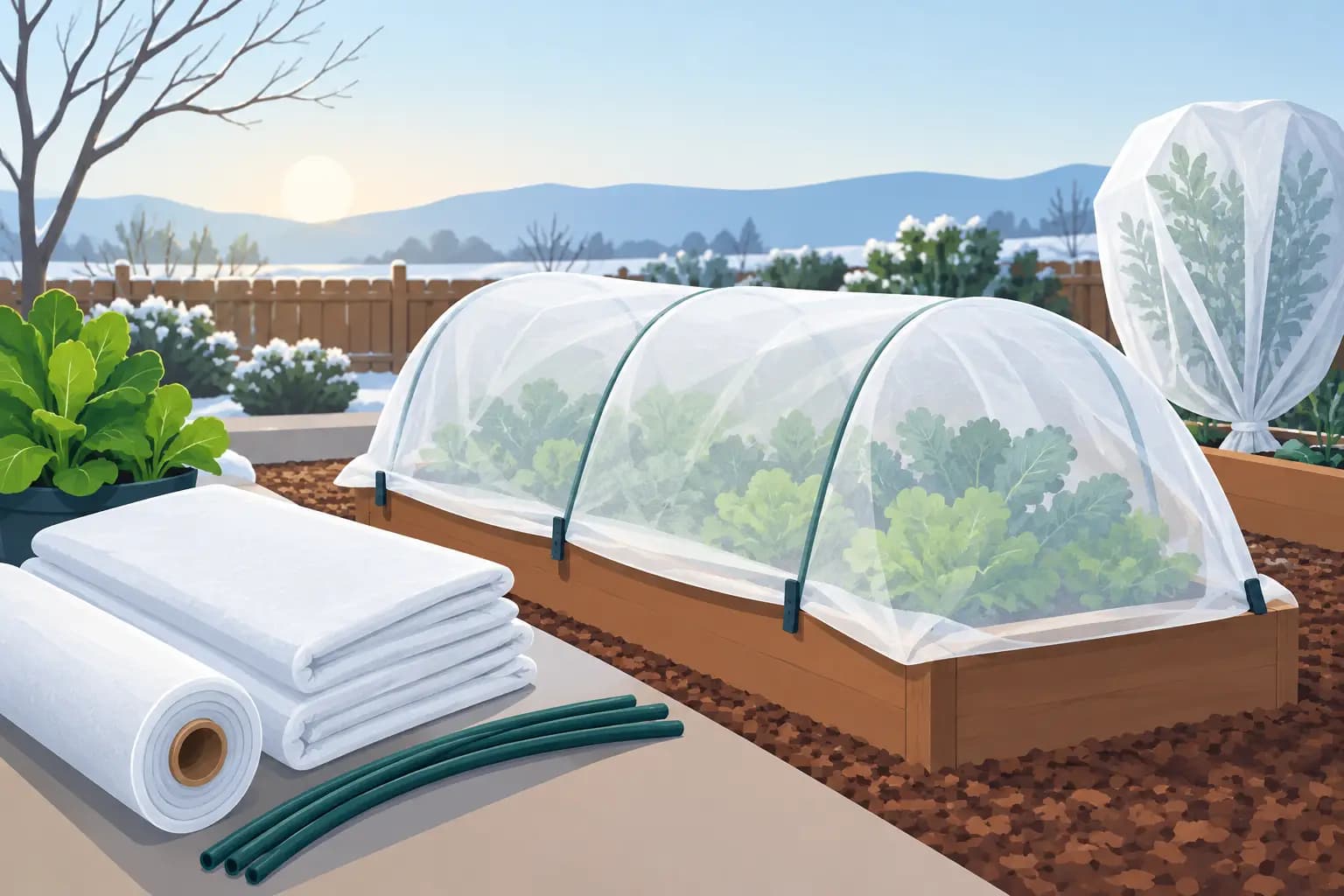
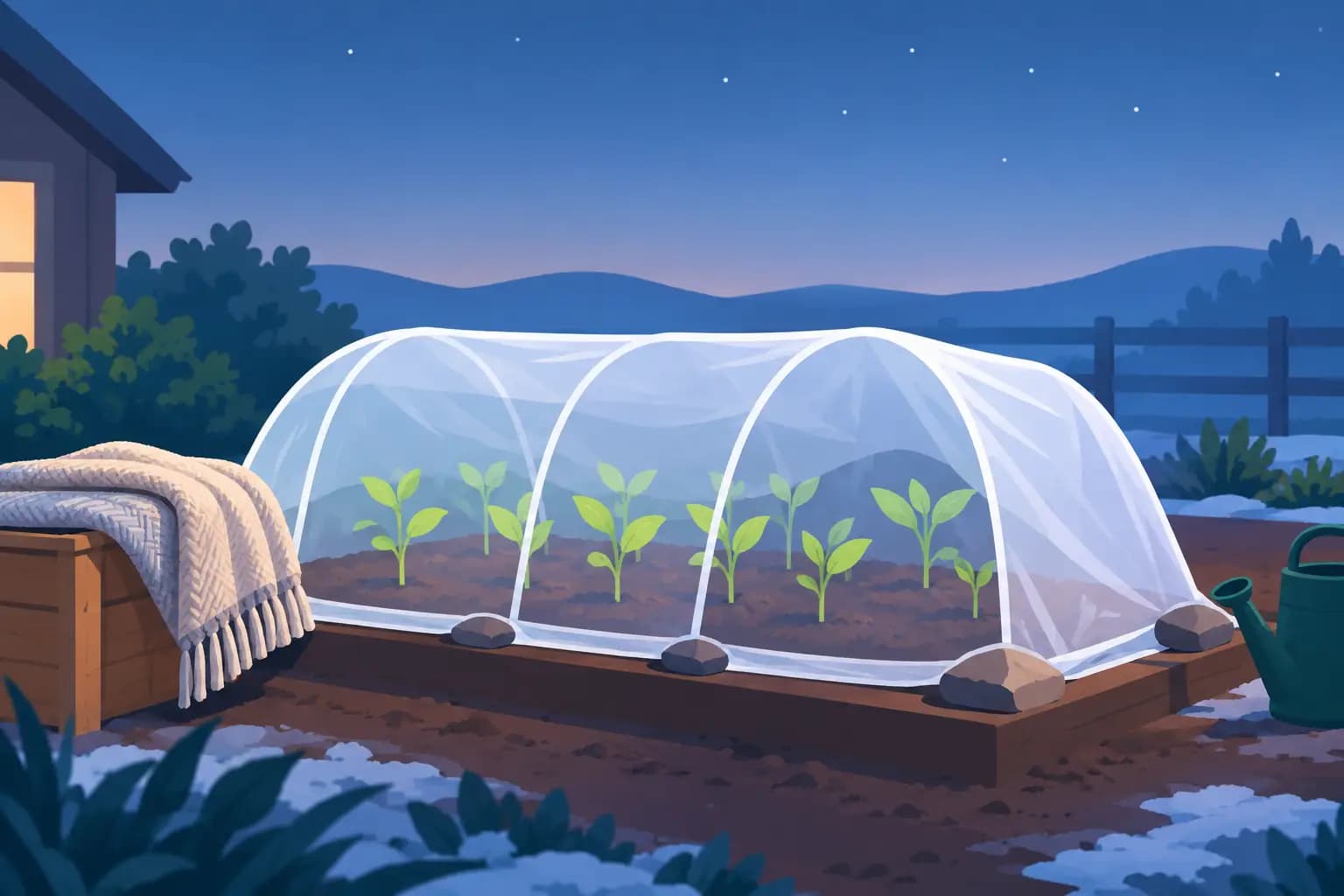
For seedlings already planted in the ground, use a breathable cover that reaches the soil on all sides. Frost cloth, row cover, old sheets, lightweight blankets, or clean towels all work for a short cold event. The goal is to trap warmth radiating from the soil, not to wrap each plant tightly.
Set up the cover before sunset, while the ground still holds the day’s warmth. Push in hoops, stakes, tomato cages, or upside-down pots to keep fabric from resting directly on delicate leaves. Then drape the material over the supports and secure the edges with boards, bricks, stones, or soil.
A loose cover with sealed edges is more effective than a heavy cover with gaps. Cold air will move under an unsecured sheet quickly, especially in a windy yard. Leave enough slack for the fabric to reach the soil without pulling against the supports.
If you only have plastic sheeting, use it as an outer layer over hoops, not directly against foliage. Plastic can transfer cold to leaves where it touches them and can create damaging heat fast once morning sun arrives. Remove or vent it early.
For a one-night emergency, overturned buckets, nursery pots, storage bins, or cardboard boxes can protect individual plants. Place them over seedlings after sunset and weigh them down gently. If temperatures are expected to remain below freezing for several hours, add a cloth layer inside the container or use a proper row cover instead.
Move containers to a sheltered spot
Potted seedlings are easier to protect because you can move the whole root zone. Group containers close together near a house wall, under a covered porch, or inside an unheated garage or shed. A south- or west-facing wall can release stored heat through the night.
Bring trays of tender seedlings indoors when possible. A garage is usually adequate for a single cold night, provided temperatures stay above freezing. They do not need grow lights overnight. They need protection from cold and wind.
Avoid placing seedlings beside a furnace vent, fireplace, or other intense heat source. The sudden shift from cold outdoor air to dry indoor heat can stress them just as surely as a chilly night. A cool, protected space is the better choice.
If containers are too large to move, wrap the pot with a blanket, burlap, or spare towels and cover the foliage with frost cloth. Roots in a container cool much faster than roots in garden soil, so insulating the pot matters as much as covering the leaves.
Water the soil, not the leaves
Moist soil stores more heat than bone-dry soil. If the bed is dry and a cold night is coming, water the soil in the late afternoon. Do not soak it into mud, and do not spray the leaves at night. Wet foliage combined with low temperatures can worsen cold injury and encourage disease when conditions stay damp.
This is a modest advantage, not a substitute for a cover. Watering alone will not protect basil from a freeze. Think of it as helping the soil release a little extra warmth under row cover.
Mulch can help moderate soil temperature, especially around established transplants, but do not pile it over tiny seedlings. Keep mulch a short distance from stems so air can circulate and the plants do not stay constantly damp.
Remove covers at the right time
Protection works best when it is temporary. Once temperatures rise above freezing and the sun is up, remove blankets, sheets, buckets, and plastic. Frost cloth can stay on longer if the day remains cold, but check that seedlings have enough airflow and light.
This morning step is easy to miss after a late-night scramble. A covered bed can heat sharply in direct sun, even when the air still feels cool. If you cannot uncover plants early, use breathable row cover rather than plastic or a thick blanket.
After a cold night, resist the urge to fertilize or prune immediately. Give seedlings a day or two to show what happened. Cold injury may first appear as water-soaked, limp, or darkened tissue. Leaves can look rough while the growing point remains alive.
If only outer leaves are damaged, keep the plant watered normally and wait. If the center growth is black, mushy, or collapsed, the seedling is unlikely to recover. Replanting may be the more efficient choice, particularly early in the season.
Match the protection to the cold event
A forecast of 42 degrees F calls for a different response than a hard freeze. Overprotecting every cool night creates unnecessary work and can slow hardening off. Underprotecting a real frost can cost a week of growth or an entire planting.
Use this quick decision guide when evening arrives:
- Above 45 degrees F: Most hardened-off seedlings can stay uncovered. Watch tender basil and recently transplanted warm-season crops in exposed beds.
- Between 36 and 45 degrees F: Cover warm-season seedlings or move containers to shelter. Cool-season crops can usually remain out.
- Between 32 and 35 degrees F: Cover tender plants carefully, seal the edges, and protect container roots. Cover young cool-season transplants if they are newly planted.
- Below 32 degrees F: Bring tender containers inside when possible. Use supported frost cloth or blankets for planted seedlings, and add a second layer if the freeze will last several hours.
Wind changes the plan. A 40-degree night with steady wind can dehydrate and chill a small transplant more than a calm 36-degree night. Secure covers well, and use a windbreak such as a fence, porch wall, or greenhouse side when you can.
Make tomorrow night easier
Keep a small cold-weather kit near the garden: frost cloth or old sheets, clips or clothespins, bricks, a few hoops or stakes, and several buckets for individual plants. That turns a forecast alert into fifteen quiet minutes rather than a dark-yard scavenger hunt.
As plants grow and roots settle in, they become more resilient. Until then, treat the first few weeks after transplanting as a protected transition. The right cover on the right night preserves the momentum you worked hard to start - and lets you wake up to seedlings ready for another day of growing.