Moon Phase Gardening Calendar: A Practical Plan
6 min read
You have 25 minutes after dinner, seedlings ready to go, and a rain system moving in tomorrow. A moon phase gardening calendar can give that decision a useful rhythm, but it should never make you ignore the soil in front of you. For a productive backyard garden, lunar timing works best as a planning layer beneath the signals that carry more weight: temperature, moisture, frost risk, plant stage, and the forecast.
The goal is not to turn every garden task into a celestial calculation. It is to create a calmer routine: use the moon to group jobs, then let local conditions decide whether tonight is actually the right night to plant, prune, water, or harvest.
What a moon phase gardening calendar is for
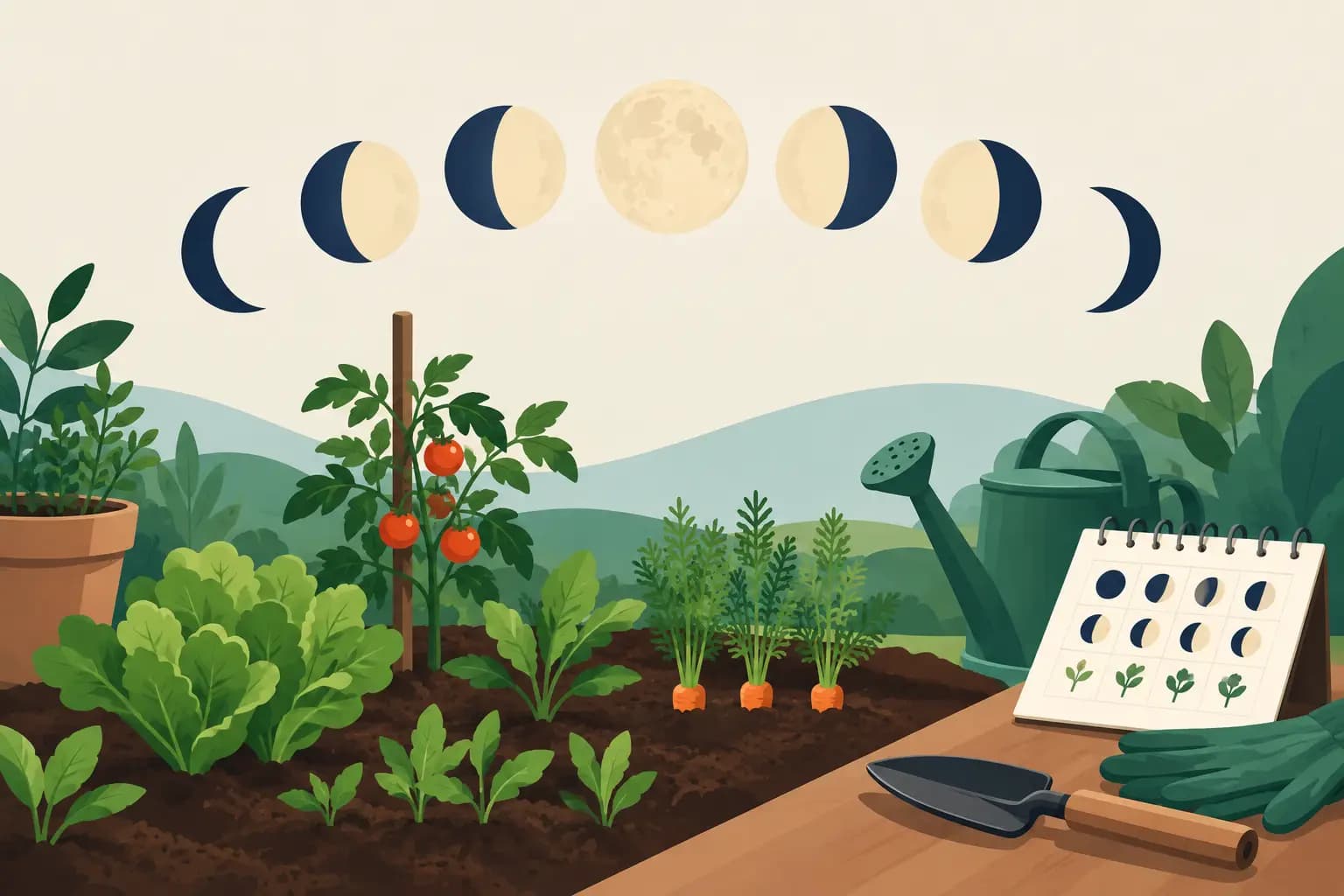
Moon phase gardening follows a long tradition of timing tasks around the waxing moon, full moon, waning moon, and new moon. Many gardeners use the increasing light between the new and full moon for crops grown above ground, then use the decreasing light after the full moon for root crops, pruning, and maintenance.
Some versions go further, assigning individual days to zodiac signs or particular plant parts. That level of detail can become another chore. For most home gardeners, the four major phases are enough to create a repeatable cadence without filling your phone with rules you will not use.
There is a reasonable question beneath the tradition: does it work? The moon affects tides, and moonlight and lunar cycles can influence behavior in parts of the natural world. But strong, consistent evidence that planting vegetables by moon phase reliably produces better home-garden yields is limited. Soil temperature, seed quality, rainfall, pest pressure, sunlight, and proper spacing have much clearer effects.
That does not make a lunar calendar useless. A calendar that gets you outside at the right interval, helps you avoid putting off succession sowing, and gives recurring maintenance a place in the week can improve a garden for practical reasons. Treat it as structure, not a promise.
Moon phase gardening calendar by phase
New moon to first quarter: start and establish
The new moon is a good cue to begin work that supports new leafy growth. If your local conditions are right, sow lettuce, spinach, arugula, basil, cilantro, kale, and other crops harvested above the soil. Start seeds indoors if your outdoor nighttime temperatures are still too cold.
This is also a useful phase for transplanting young plants that have been hardened off. Give them the best possible start: plant into moist, workable soil, water them in deeply, and protect them from wind or an unexpected cold snap. A favorable moon phase cannot compensate for tomatoes going into 48-degree soil.
For busy households, make this your short planning checkpoint. Walk each bed, look for gaps, and decide what needs sowing in the next two weeks. Ten quiet minutes spent checking seed packets, soil moisture, and the forecast is more useful than trying to plant everything at once.
First quarter to full moon: plant above-ground crops and support growth
As the moon brightens, traditional lunar calendars favor fruiting and leafy crops. This can line up neatly with a practical garden task: keep warm-season plants moving once the weather is settled. Direct-sow beans, cucumbers, squash, and pumpkins when soil temperatures have reached the range those seeds need. Transplant peppers and tomatoes only after the frost window has passed and nights are reliably mild.
Use this period to stay ahead of support work. Tie indeterminate tomatoes before branches bend, guide cucumbers onto a trellis, and thin crowded carrot or beet seedlings before they compete for water and nutrients. These are small tasks, but late action creates the kind of garden chaos that takes an entire Saturday to correct.
Watch the forecast before watering. If a soaking rain is expected overnight, skip the hose and inspect drainage instead. If several hot, dry days are ahead, water deeply at the root zone before plants show stress. The calendar tells you what might fit this week. Weather tells you what needs attention tonight.
Full moon to last quarter: harvest, prune, and check pressure points
Traditional practice often treats the full moon and early waning period as a time to harvest, preserve, prune, and handle plants grown for their roots. Whether or not you follow that belief closely, this is a sensible midpoint inspection.
Harvest beans, zucchini, cucumbers, herbs, and ripe tomatoes frequently. Leaving mature fruit on the plant slows production in many summer crops. Cut herbs in the morning after dew has dried, before the day gets hot, and use or preserve what you pick while the flavor is strongest.
Then inspect for problems that become expensive if ignored. Check the undersides of squash and cucumber leaves for pests. Look through tomato foliage for early spotting, and remove only damaged leaves if air circulation is poor. On lawns, watch for heat stress rather than mowing on an arbitrary schedule. Grass growing slowly in hot weather may need a higher mowing height, not a closer cut.
If you are pruning, let plant health and season lead. Avoid heavy pruning of shrubs heading into extreme heat or a hard freeze. For vegetables, remove diseased foliage with clean tools and avoid working wet plants, which can spread disease from leaf to leaf.
Last quarter to new moon: work the soil and reset
The darker part of the lunar cycle is commonly associated with roots, soil work, and cleanup. It is a practical time to sow carrots, beets, radishes, turnips, and other root crops if the season and soil temperature fit. It is also an excellent reminder to reset beds between plantings.
Pull spent lettuce, peas, or bolting cilantro. Add compost where a crop has finished, then cover bare ground with mulch or a quick-growing cover crop if your climate and schedule allow. In a small greenhouse, remove fallen leaves, check ventilation hardware, and refill seed-starting supplies before the next rush.
Do not force soil work after a heavy rain. Wet soil compacts easily, especially in raised beds with fine-textured soil. If a handful squeezed in your palm forms a sticky ball instead of crumbling, wait. The right lunar phase is not a reason to damage the growing space you will rely on all season.
Put the moon behind the decisions that matter most
A useful moon phase gardening calendar starts with your location, not a generic chart. The same waxing-moon date can fall during a Minnesota frost warning, a Texas heat wave, or a dry California week. Those situations need different actions.
Use a simple order of operations. First, check for immediate weather risks: frost, high winds, heat, heavy rain, or an extended dry spell. Second, check the plant's growth stage. A tomato covered in flowers needs support and consistent moisture; a tomato seedling indoors may need potting up and more light. Third, use the moon phase to choose from the non-urgent work still on the list.
That approach prevents a common mistake: postponing necessary care because a calendar says it is not the ideal day. Cover basil before a cold night, regardless of the moon. Water a newly transplanted pepper during a dry spell, regardless of the moon. Pick a ripe cucumber before it turns yellow, regardless of the moon.
A garden-management tool such as Tomatograph can make this less theoretical by pairing moon phase with local weather, frost risk, plant stage, and your own notes. Instead of receiving a vague instruction to garden with the waxing moon, you can turn that context into a short plan: sow a second row of lettuce, check the tomato ties, and cover the basil before Thursday night.
Build a calendar you will actually keep
Keep lunar planning light enough to survive a busy month. At each new moon, choose one planting task and one bed check. At the full moon, choose one harvest or preservation task and one pest or disease inspection. During the waning phase, clear one finished area and prepare it for what comes next.
Record outcomes, especially for repeat crops. Note the date, variety, weather, soil condition, and what you did. If you sowed beans during a waxing moon but the bed stayed cold and wet, the poor germination tells you more about soil conditions than lunar timing. Over a few seasons, your own notes become a more dependable calendar than a general rule printed for every climate.
Let the moon give your garden a rhythm, not a rigid set of orders. When the next phase arrives, step outside, check what is actually happening, and choose the one task that will make tomorrow's garden easier to care for.