Tomato Leaf Disease Identification Made Clear
6 min read
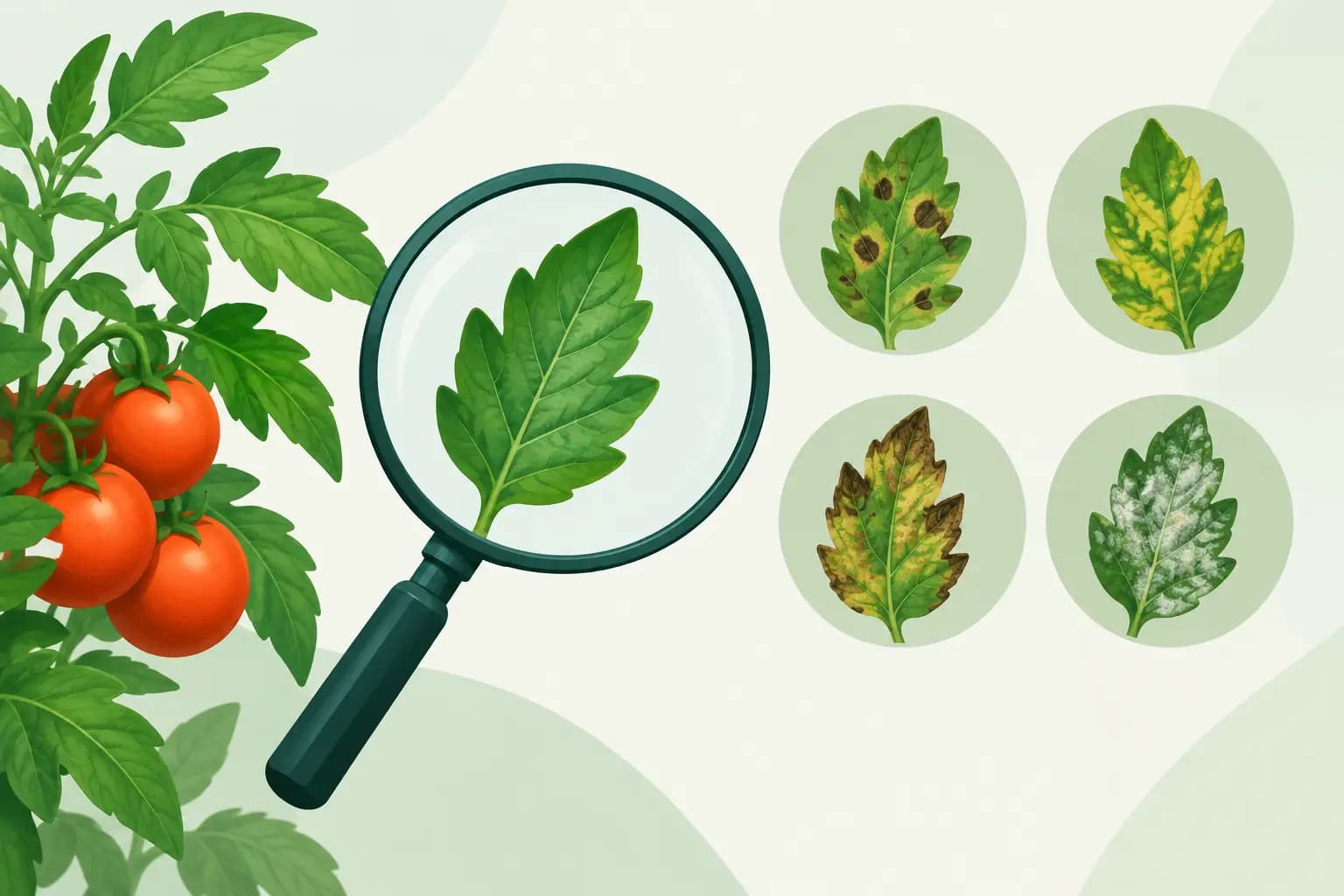
A tomato leaf with a few brown spots can make a good garden feel suddenly uncertain. Tomato leaf disease identification works best when you stop treating every mark as an emergency and look for a pattern: where it began, what the spot looks like on both sides of the leaf, how fast it is moving, and what the weather has been doing.
That takes five quiet minutes, not an evening of searching. Start before you spray, fertilize, or remove half the plant. Those reactions can make diagnosis harder and sometimes create a second problem.
Start with a five-minute tomato check
Bring your phone, a clean pair of pruners, and a scrap of paper if you are tracking more than one bed. Look at the oldest leaves near the soil first, then compare them with clean leaves higher on the plant. Turn a few leaves over. Check stems, fruit, and nearby tomatoes too.
Ask four questions. Are the marks round, angular, fuzzy, or water-soaked? Is there a yellow halo? Are symptoms mostly on lower leaves, new growth, or the whole plant? Finally, did the problem follow several rainy days, overhead watering, humid greenhouse conditions, heat stress, or a pesticide application?
A single damaged leaf is often just damage. Disease becomes more likely when similar symptoms appear on several leaves and continue to show up after new growth emerges.
If you see a suspected disease, take clear photos of the whole plant, the top and underside of an affected leaf, and a close-up of the lesion. One tightly cropped image rarely gives enough context. A health check is more useful when it can compare the symptom with the plant's age, recent weather, and location in the garden.
Tomato leaf disease identification by pattern
Early blight
Early blight usually starts on older, lower leaves. Look for brown spots with rings inside them, often described as a target or bull's-eye pattern. Yellowing spreads around the spots, and affected leaves may dry up and drop.
This fungal disease is common when tomato foliage stays wet or plants are crowded. It can weaken a plant over time, but it is usually not a reason to pull the entire tomato immediately. Remove heavily affected lower leaves on a dry day, keep leaves off the soil, and improve airflow. Then watch new growth. If new leaves remain mostly clean, your intervention is working.
Septoria leaf spot
Septoria can resemble early blight at first, but its spots are usually smaller and more numerous. They often have pale gray or tan centers with darker brown margins. The plant may lose a surprising amount of lower foliage while stems and fruit initially look healthy.
Rain splash helps Septoria move from soil and old plant debris onto leaves. Remove badly infected leaves, mulch bare soil to reduce splashing, and water at the base of the plant. Do not handle wet tomatoes if you can avoid it. Your hands, pruners, and clothing can move spores around a crowded bed.
Late blight
Late blight deserves faster action. Lesions are often irregular, dark brown, and water-soaked rather than neatly round. In cool, damp conditions, you may see pale gray or white fuzzy growth on the underside of lesions. Stems can develop dark patches, and fruit may show firm, greasy-looking brown areas.
This is not a wait-and-see situation. Isolate the plant from healthy foliage, avoid touching other tomatoes or potatoes afterward, and remove severely affected plants if the symptoms are spreading quickly. Bag plant material rather than placing it in a casual compost pile. A local Extension office can help confirm a suspected case, especially when late blight reports are active in your region.
Bacterial spot and bacterial speck
Bacterial problems often create small dark spots that look greasy or water-soaked, sometimes with a yellow halo. Spots may be more angular because leaf veins limit their shape. Fruit can develop tiny raised or scabby marks, which is a useful clue that this is more than a fungal leaf issue.
These diseases spread readily through splashing water, wet handling, and contaminated tools. Remove the worst leaves, disinfect pruners between plants, and stop overhead watering. Copper-based products may suppress spread when used according to the label, but they do not restore damaged leaves or cure an infected plant. Their value depends on timing and thorough coverage.
Leaf mold
Leaf mold is most common in humid, enclosed spaces, including a DIY greenhouse with poor ventilation. The upper leaf surface develops pale yellow patches. Turn the leaf over and you may find olive-green to brown, velvety mold beneath those areas.
The immediate job is ventilation. Open doors and vents early, space or prune plants only enough to let air move through them, and water the soil rather than the foliage. A greenhouse that remains damp all night can turn a small leaf mold issue into a season-long chore.
Powdery mildew
Powdery mildew looks like white flour dusted across leaves. Unlike many tomato diseases, it does not need free water on the leaf to develop. It is more likely when days are warm, nights are humid, and airflow is poor.
Remove the most affected leaves and reduce crowding. Do not strip a stressed tomato bare. Leaves still power fruit ripening, so take no more than the plant can reasonably replace. If infections are light, better air movement and consistent watering may be enough.
Problems that look like disease but are not
Not every yellow, spotted, or curled leaf needs a fungicide. Spider mites leave fine pale stippling, usually with webbing on the underside of leaves. Their damage is often worst in hot, dry conditions. A strong spray of water directed at leaf undersides can help dislodge them, but repeat checks matter.
Nutrient issues tend to follow a more orderly pattern than disease. Nitrogen deficiency creates more uniform yellowing on older leaves. Magnesium deficiency often produces yellow areas between green veins. Before adding fertilizer, check soil moisture. A tomato with stressed or waterlogged roots may be unable to take up nutrients even when they are present.
Herbicide drift can cause twisted, narrow, cupped new leaves and distorted growth. Disease spots are not usually the main feature. If several broadleaf plants near a lawn or driveway show the same strange new growth after weed treatment, consider drift before applying a disease product.
Viruses can cause mottled light and dark green leaves, curling, stunting, and distorted new growth. There is no practical cure for a virus-infected tomato. Remove plants that are clearly declining and disinfect tools before moving on. This is frustrating, but leaving a badly infected plant in place can give insect vectors more time to spread the problem.
Choose the smallest useful response
Once tomato leaf disease identification points to a likely cause, match the response to the level of risk. A few lower leaves with early blight need cleanup and better watering habits. Rapidly expanding, water-soaked lesions during cool wet weather require urgent containment. A recurring greenhouse problem calls for a ventilation adjustment, not just another spray.
Use this order of operations: remove heavily infected leaves, clean tools, keep water off foliage, improve airflow, and mulch exposed soil. Then reassess in five to seven days. New growth is your scoreboard. Old damaged leaves will not become green again, but clean new leaves tell you the plant has a chance to keep producing.
Fungicides can be useful, especially when weather favors disease and symptoms are appearing across multiple plants. They work best as protection for healthy tissue, not as a repair kit for leaves already covered in lesions. Choose a product labeled for tomatoes and the suspected disease, follow the label exactly, and account for the harvest interval before picking fruit. More frequent application is not better.
Make next week's check easier
Most tomato disease pressure starts with moisture lingering where it should not. Stake or cage plants before they sprawl, mulch after soil warms, water early at the base, and leave enough room for air to move through each row. Rotate tomatoes and related crops away from the same bed when possible, especially after a serious disease year.
Keep a simple record of when symptoms appeared, recent rain, and what you changed. Tomatograph can turn those details, local weather, and plant photos into a focused weekly check so you know whether tonight's job is removing three leaves, opening the greenhouse earlier, or simply letting a healthy plant grow.
Your tomato does not need perfect leaves to make a worthwhile harvest. It needs you to notice a changing pattern early, make one sensible adjustment, and check back before a small problem gets to set the agenda.