Companion Planting Chart for Productive Beds
6 min read
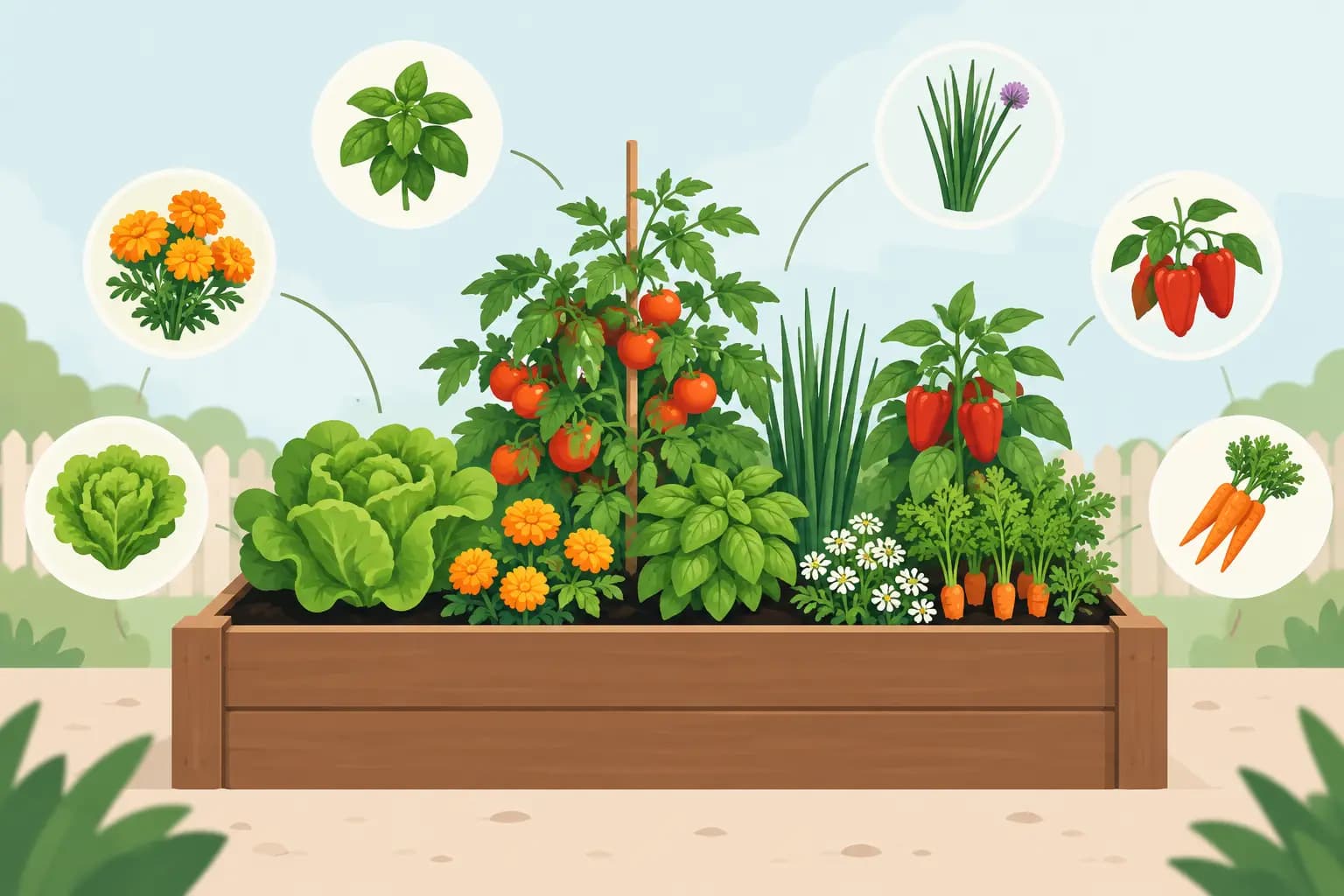
A companion planting chart is most useful when it helps you make one clear decision: what belongs in the open space beside a crop you are planting tonight. It is not a set of magical pairings that guarantees pest-free vegetables. It is a practical way to organize a bed around spacing, shade, timing, and the few plant combinations that create real problems.
For a busy backyard garden, start with the crop that takes the most room or stays in the ground the longest. Then use companions to fill gaps without creating a crowded, damp bed that needs constant attention.
How to Use a Companion Planting Chart
Read the chart as a planning tool, not a rulebook. A tomato can grow beside basil, but that does not mean basil fixes poor airflow, inconsistent watering, or early blight already spreading through the bed. Carrots near onions may help diversify a planting, but they still need loose soil to form straight roots.
The strongest companion planting decisions usually come from four practical questions. Do these plants need the same sun and water? Will one shade the other at the wrong time? Do they mature at different speeds, allowing you to harvest one before the other fills out? Do they share a serious disease or pest concern?
That last question is often more useful than searching for a “best companion.” Tomatoes and potatoes are close relatives, for example. Putting them together can make it easier for late blight and other shared problems to move through one section of the garden. Give them separate beds when possible.
Companion Planting Chart for Vegetables and Herbs
| Main crop | Good neighbors | Give space from | Why it works in a home garden | | --- | --- | --- | --- | | Tomatoes | Basil, lettuce, carrots, onions, marigolds | Potatoes, crowded corn | Small early crops use space beneath young tomatoes; basil and flowers add diversity without competing for height. | | Peppers | Basil, carrots, lettuce, onions | Fennel, overcrowded tomatoes | Peppers and basil like similar warmth; lettuce can occupy the bed before peppers widen. | | Carrots | Onions, chives, lettuce, radishes, peas | Fennel | Radishes mark slow carrot rows and are harvested early; onions stay relatively upright. | | Cucumbers | Bush beans, dill, nasturtiums, lettuce | Potatoes, dense squash plantings | Trellised cucumbers free ground space; low companions can use the shaded edge early in the season. | | Squash and zucchini | Corn, bush beans, nasturtiums, radishes | Potatoes, another tightly spaced squash vine | Large leaves need room and airflow. Radishes are gone long before vines take over. | | Beans | Carrots, cucumbers, corn, radishes | Onions, garlic, crowded peppers | Beans can climb corn or a trellis, while quick radishes finish before bean roots expand. | | Peas | Carrots, radishes, lettuce, spinach | Onions, garlic | Cool-season peas provide light shade while lettuce and spinach are still growing. | | Brassicas: broccoli, kale, cabbage | Dill, celery, onions, lettuce, nasturtiums | Tomatoes in a crowded bed, strawberries | Herbs and flowers support a more varied bed; lettuce can fill open ground while brassicas are young. | | Potatoes | Bush beans, lettuce, scallions | Tomatoes, cucumbers, squash | Keep potatoes away from tomatoes because of shared disease pressure and allow room for hilling. | | Lettuce | Carrots, radishes, onions, cucumbers | Mature squash and tomatoes without spacing | Fast lettuce can be harvested before larger warm-season crops cast deep shade. |
Fennel deserves its own note. It is often left off simple charts because it is a poor fit in mixed vegetable beds. Fennel grows tall, can shade nearby crops, and is generally easiest to manage in a separate corner, container, or pollinator strip.
Build the Bed Around Timing, Not Just Pairings
A chart cannot see your planting date, rainfall, or the fact that your tomato transplants are already twice the size expected. Those details determine whether a pairing stays helpful.
Consider a common spring bed: tomatoes are going into the ground after the last frost date, and there is bare soil between plants. You can tuck in lettuce, radishes, or small basil starts. The lettuce and radishes are temporary residents. Harvest them before the tomatoes begin to shade the soil heavily. Basil can stay longer, but leave enough room to reach the tomato base for watering and pruning.
This is called succession thinking, and it is usually more valuable than cramming every suggested companion into one bed. A productive garden often has a crop that belongs there now and a crop that will belong there later.
The same approach works with cucumbers. Plant them on a sturdy trellis, then use the open front edge for lettuce during cool weather or bush beans once the soil has warmed. If the cucumber vines begin to mildew, the answer is not to add more companions. Thin foliage where needed, water at the soil line, and make sure air can move through the planting.
The Trade-Offs Most Charts Leave Out
Companion planting has limits. A diverse bed can make the garden more resilient and pleasant to work in, but diversity does not replace crop rotation, soil fertility, irrigation, or timely pest checks.
Flowers such as nasturtiums and marigolds can bring beneficial insects and make a bed easier to observe. They can also take up more space than expected. In a four-by-eight-foot raised bed, one sprawling nasturtium may be enough. Plant it near an edge where you can trim it back rather than letting it cover young peppers or lettuce.
Aromatic herbs are similar. Dill attracts useful insects when it flowers, but it can become tall and self-seed freely. Mint is useful in the kitchen but belongs in a pot, not loose in a vegetable bed. Companion planting should reduce maintenance, not create a new plant-management problem.
There is also a difference between planting beside a crop and planting too close. Keep the spacing recommended for the main crop, especially tomatoes, squash, cucumbers, broccoli, and peppers. The companion fills unused space only after you protect the airflow and root room your main crop needs.
A Simple Plan for Your Next Planting Session
Before planting, choose one anchor crop for each bed. A bed might be tomatoes, cucumbers, potatoes, or a block of fall broccoli. Mark the mature width of that crop first, not the size of the seedling in your hand.
Next, add one companion with a clear job. Use radishes to occupy spring gaps, lettuce to make use of temporary shade, basil near tomatoes and peppers, or flowers at bed edges to add diversity. One purposeful companion is easier to monitor than six different plants competing in every inch of soil.
Finally, check the weather before you plant. A week of heavy rain changes the plan for low-growing companions because damp foliage and slow drying can raise disease pressure. A late cold snap may delay basil and peppers even if the rest of the bed is ready. Tomatograph can turn those local conditions into a short weekly task list, so the chart supports your decision instead of becoming another page to manage.
The best companion planting chart leaves you with a garden you can still water, weed, harvest, and inspect in fifteen quiet minutes. Put plants together for a reason, leave room for them to grow, and let the season tell you when the plan needs adjusting.