12 Best Vegetables for a Small Greenhouse
7 min read
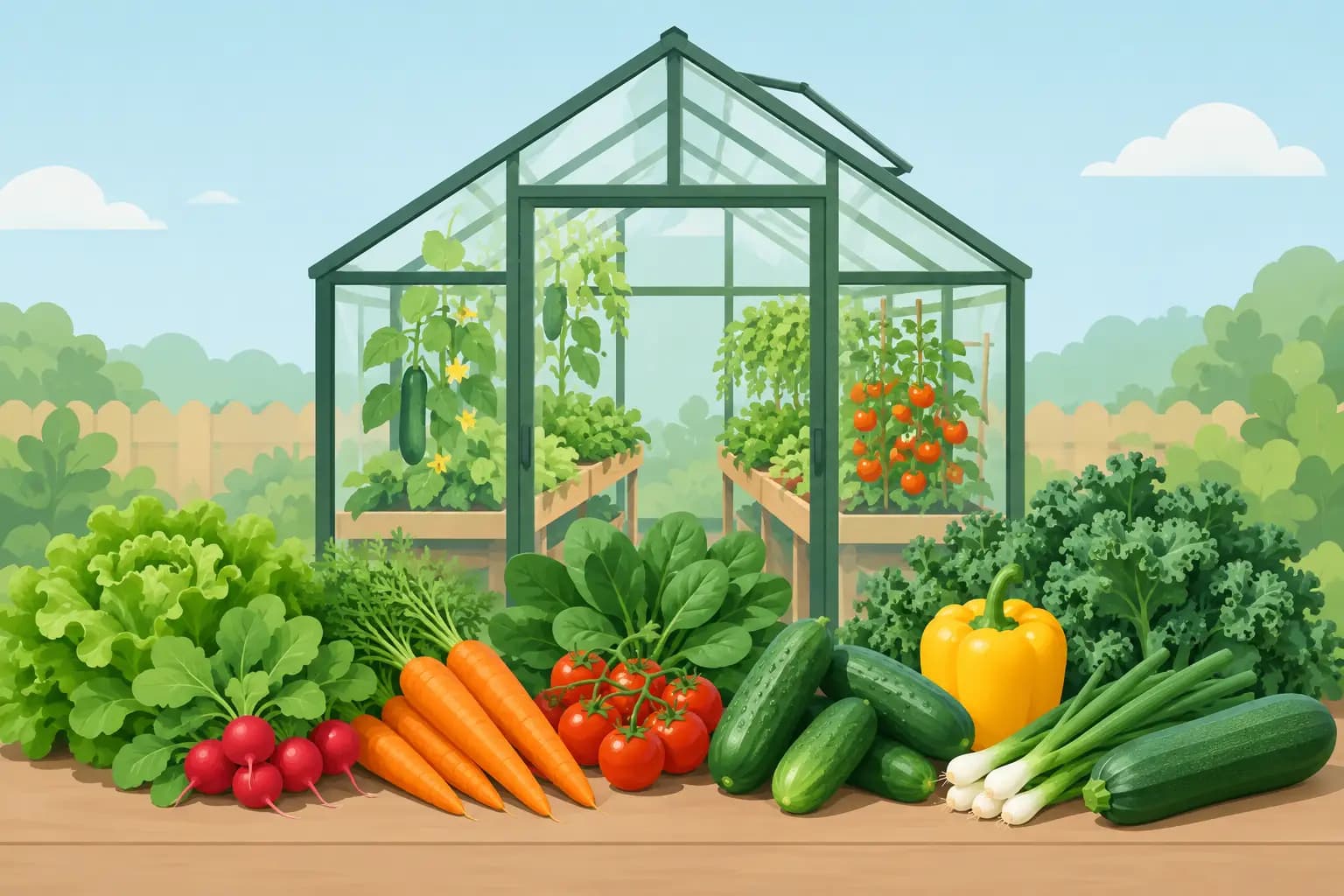
A small greenhouse earns its keep when it produces food that is expensive at the store, easy to harvest often, and worth checking after work. Choosing the best vegetables for small greenhouse space is less about cramming in every crop you like and more about matching plants to heat, height, and the few minutes you have to care for them.
The good news: a modest greenhouse can supply salads, stir-fries, sandwiches, and summer dinners for months. The catch is that protected space changes the rules. Rain will not water your plants, temperatures can spike fast, and one overgrown vine can shade everything beside it. Start with crops that give a high return per square foot and have clear, repeatable care needs.
What makes a vegetable right for a small greenhouse?
The best candidates are productive, vertical, or quick to harvest. They also tolerate container growing if your greenhouse has a paved floor or limited bed space. A cherry tomato that climbs a trellis can feed a household from one large container. A head of cabbage occupies the same space for weeks, then gives you one harvest. Both have a place, but they solve different problems.
Your greenhouse type matters, too. In an unheated structure, summer crops such as tomatoes and peppers get an earlier start and a longer finish, while greens can carry you through spring and fall. In a heated greenhouse, you have more winter options, but low light still slows growth. Heat alone does not turn January into June.
Place tall trellised crops along the north side of the greenhouse, where they are less likely to shade shorter plants. Reserve the sunny front and edges for greens, roots, and containers. Leave enough room to reach every plant without stepping over a watering can or brushing foliage when it is wet.
Best vegetables for small greenhouse space
1. Cherry tomatoes
Cherry tomatoes are often the first crop worth growing under cover. They produce for a long season, taste noticeably better picked ripe, and grow upward rather than outward when trained to a string or stake. Choose indeterminate varieties for a steady harvest, or determinate patio types if you need a shorter plant.
Give each plant a large container or a generous share of a bed, then prune lightly for airflow. In hot weather, open doors and vents early. A greenhouse tomato that stays humid overnight is more likely to develop fungal trouble than one that gets a daily air exchange.
2. Cucumbers
Greenhouse cucumbers are a strong choice because they climb, harvest frequently, and reward consistent watering. Look for parthenocarpic varieties if possible. They set fruit without pollination, which is useful in a closed space where bees may not visit regularly.
Train one or two plants vertically, removing yellowing lower leaves as vines grow. Cucumbers are not forgiving of dry soil followed by a flood of water. Check them every day during a hot spell, especially when fruit is forming.
3. Sweet and hot peppers
Peppers use less vertical space than tomatoes and appreciate the warmth a greenhouse holds after sunset. Sweet peppers take patience, but one healthy plant can produce for months. Hot peppers are even more space-efficient if your household uses them.
Avoid pushing young pepper plants into cold soil. They may survive, but they often sit still for weeks. Wait until nights are reliably mild in an unheated greenhouse, then water at the base and support branches once fruit begins to weigh them down.
4. Eggplant
Eggplant is an excellent warm-season crop for growers in cooler parts of the country. It needs more heat than most outdoor gardens reliably provide, while a greenhouse gives it the stable warmth it wants. Compact Asian and patio varieties fit particularly well.
Do not plant too many. Two plants can be plenty in a small greenhouse, and their broad leaves can block circulation. Keep foliage dry, watch for aphids, and harvest fruit while the skin is glossy rather than waiting for it to become oversized.
5. Pole beans
Pole beans turn vertical space into dinner. They grow quickly, produce for weeks, and are easy for families to pick. In an unheated greenhouse, sow them after the soil warms. Early sowing in cold conditions usually leads to weak, uneven plants.
Run strings or netting up a wall, but keep beans away from tomatoes if both will become dense. Airflow is the trade-off. A packed greenhouse may look productive in May and become difficult to manage by July.
6. Lettuce
Lettuce makes a greenhouse useful before and after the tomato season. Loose-leaf varieties are especially practical because you can harvest outer leaves, leave the center growing, and avoid waiting for a full head. Sow a small patch every two or three weeks instead of planting it all at once.
During warm stretches, shade cloth or a cracked door can make the difference between tender leaves and bitter, bolting plants. Lettuce likes protection from frost, but it does not want a midsummer sauna.
7. Spinach
Spinach is built for the shoulder seasons. It grows well when nights are cool and can handle light frosts in an unheated greenhouse. That makes it a dependable crop to sow while summer plants are still weeks away.
Use quick, repeated sowings. Once days get hot, spinach will bolt no matter how carefully you water. When that happens, pull it, clear the space, and move on to a heat-loving crop rather than trying to persuade it to stay leafy.
8. Arugula
Arugula grows fast enough to make even a small empty corner worthwhile. It can be ready for baby-leaf harvest in a few weeks, and its peppery flavor holds up in salads, sandwiches, and pizza. Like lettuce, it is best in cooler weather.
Sow a shallow row every couple of weeks. If flea beetles are a problem outdoors, the greenhouse may offer welcome protection, though ventilation is still necessary to prevent damp foliage and disease.
9. Radishes
Radishes are the quick win. They are ready in roughly three to five weeks, fit between slower crops, and help you use space that would otherwise sit bare. They grow best in cool conditions, so treat them as a spring and fall crop.
Thin seedlings early. Crowded radishes make lots of leaves and disappointing roots. If you have a narrow bed edge, radishes can fill it without competing much with deeper-rooted plants.
10. Carrots
Short or round carrot varieties are surprisingly useful in greenhouse beds and deep containers. The protected environment keeps heavy rain from compacting soil and can extend your fall harvest. Their main requirement is loose, stone-free growing mix.
Carrots are slower than radishes, so they are not the right crop for every spare inch. Plant them where they can stay undisturbed, and do not move the container once seedlings are up. Consistent moisture is what keeps roots from becoming tough or splitting.
11. Scallions
Scallions deserve more greenhouse space than they usually get. They are compact, harvestable at almost any useful size, and easy to tuck along bed edges. Start from seed for the lowest cost, or transplant small clumps for a faster harvest.
Because they take little room, scallions are a good companion crop beside peppers or eggplants while those plants are still small. Pull a few at a time and re-sow the gap.
12. Snap peas
Snap peas give an unheated greenhouse an early-season purpose. They climb readily, prefer cool weather, and can produce crisp pods weeks before outdoor planting is underway. Use a trellis and choose shorter varieties if ceiling height is limited.
Pull pea vines once production fades and replace them with beans, cucumbers, or peppers. This simple handoff keeps the greenhouse productive without forcing cool-season and heat-loving plants to share conditions that suit neither.
A calm planting plan beats a crowded greenhouse
For most small greenhouses, choose two main summer crops, then use the remaining space for fast greens and succession planting. For example, two cherry tomatoes and two cucumbers may fill the vertical zone. Around them, grow spring spinach and radishes, then replace those with basil-free vegetable choices such as scallions or compact peppers as temperatures rise.
Each week, spend fifteen quiet minutes on four checks:
- Open vents or doors before heat builds, then close them if a cold night is forecast.
- Feel the soil two inches down rather than watering by habit. Greenhouse plants do not receive rainfall.
- Pick ripe fruit and remove damaged leaves before pests or disease gain ground.
- Look at plant ties, trellises, and crowded stems while problems are still easy to fix.
If a hot, sunny afternoon follows several cloudy days, check the greenhouse before dinner. That is when wilted cucumbers, dry containers, and heat-stressed lettuce become tomorrow's problem. If a late frost is coming, close the structure before sunset and cover tender plants inside if temperatures may fall close to freezing.
A small greenhouse does not need to grow everything. Grow the crops you will harvest repeatedly, keep the paths clear, and make each visit end with one useful action. That is how a few protected square feet become part of dinner instead of another unfinished garden task.