What a Lawn Care App Should Tell You This Week
6 min read
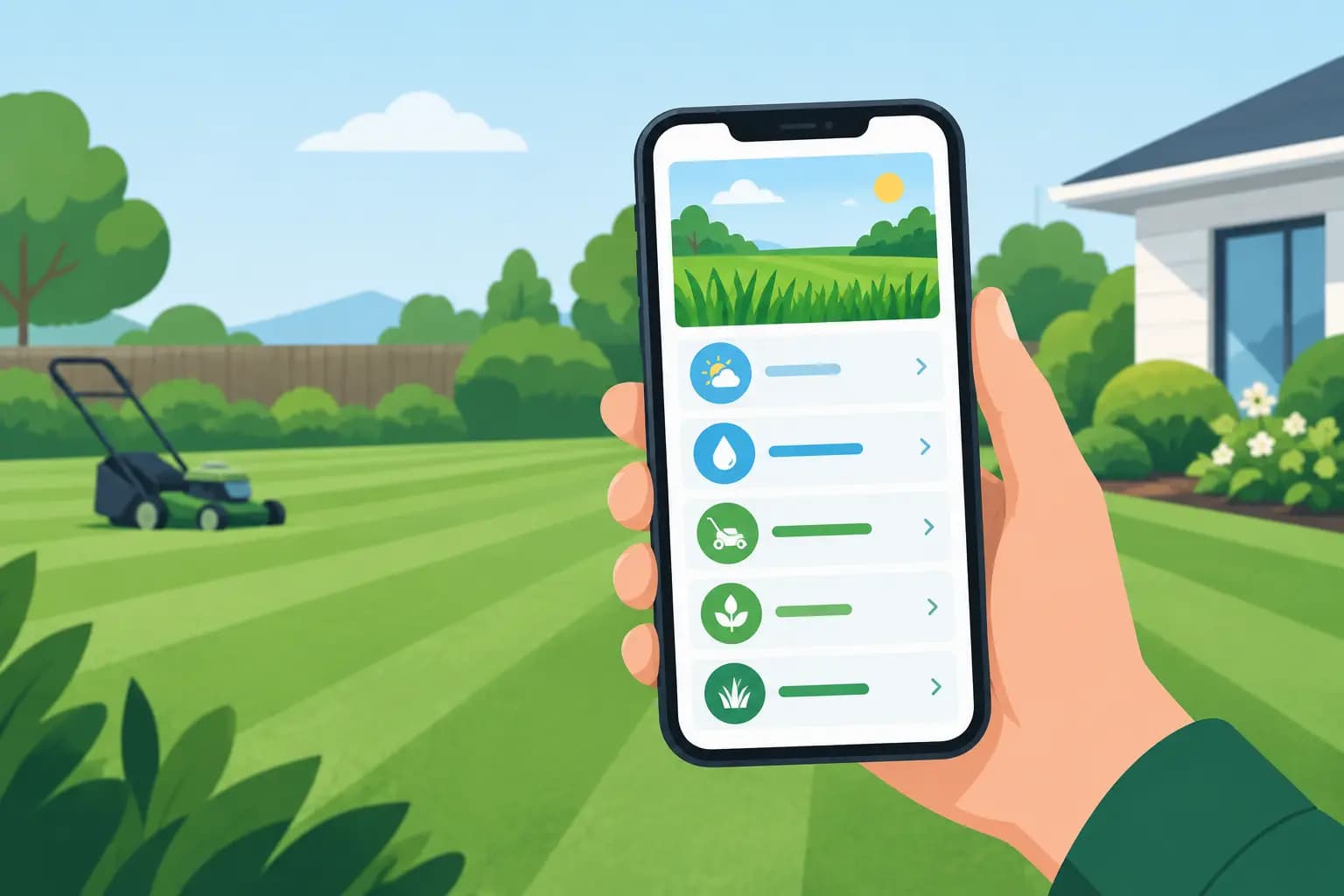
At 6:30 on a Wednesday evening, the useful question is not whether lawns need fertilizer. It is whether your lawn needs anything before the weekend rain, the next heat spell, or the first cold night. A good lawn care app answers that question without sending you into a maze of generic reminders, conflicting articles, and tasks that can safely wait.
Most homeowners do not need another stream of lawn facts. They need a calm, short plan that accounts for the grass in their yard, recent weather, the season, and what they have already done. Maybe the plan is simply: mow tomorrow at the correct height, skip watering because rain is coming, and check one thin area near the driveway. That is enough to keep momentum without turning a lawn into a second job.
Why generic lawn schedules fall short
Traditional lawn calendars are built around averages. They might recommend fertilizing in spring, watering weekly, or applying weed control in fall. Those broad ideas can be useful, but they do not account for a wet week in Georgia, a dry April in Colorado, or a surprise cold snap in Missouri.
They also tend to treat every lawn as if it were the same. Cool-season turf such as Kentucky bluegrass, tall fescue, and perennial ryegrass behaves differently from warm-season grass such as bermudagrass, zoysia, St. Augustine, or centipedegrass. Growth rate, mowing height, dormancy, fertilizer timing, and heat tolerance all change with turf type.
A fixed schedule can create two common problems. First, it prompts action when conditions do not support it, such as fertilizing stressed grass during hot, dry weather. Second, it buries the task that actually matters, such as changing a dull mower blade before it tears up actively growing turf.
A useful app should make room for the answer that busy homeowners appreciate most: do nothing today. Skipping unnecessary watering after meaningful rain is not neglect. Waiting to mow until soggy ground dries is not falling behind. Good care is often about timing, not volume.
What a lawn care app needs to know
A recommendation is only as useful as the context behind it. At minimum, a lawn care app should ask for location, grass type, lawn size or zones, and the condition of the yard. It should also work with local forecasts and recent rainfall rather than relying only on the month printed on a calendar.
Grass type is particularly important. A warm-season lawn waking up in late spring should not receive the same advice as a cool-season lawn entering its strongest growth period. If you are not certain what grass you have, the app should help narrow it down through regional clues, texture, growth habit, and photos instead of pretending that one answer fits every yard.
Weather awareness changes everyday decisions. If a half-inch of rain is expected tomorrow, scheduled irrigation can probably wait. If several hot, windy days have followed shallow watering, the lawn may need a deeper soak. If frost is likely, mowing may not be urgent, while protecting tender garden plants probably is.
Your own records matter too. When did you last fertilize? Did you overseed a thin patch? Has the backyard stayed wet since last week's storm? A care plan that remembers those details can avoid repeated suggestions and spot patterns over time. A lawn that thins every August may have a heat, compaction, shade, or irrigation issue worth investigating, not a simple shortage of fertilizer.
The weekly plan should be short and specific
The best lawn guidance is not a long checklist. It is a prioritized decision list with a reason and a realistic time estimate. Think fifteen quiet minutes after work, not a Saturday lost to chores.
For example, a weather-aware weekly plan in early fall for a tall fescue lawn might say: mow when the lawn is dry, leave clippings if they are not clumped, and water deeply only if rainfall stays below your lawn's needs. It may also flag an upcoming overseeding window, while making clear that seeding should wait until you can keep the area consistently moist.
For a bermudagrass lawn in midsummer, the plan may be different: mow often enough to avoid removing more than one-third of the blade, watch for dry spots near pavement, and hold off on major work during a heat-stress period. The task is not to follow a universal ritual. The task is to respond appropriately to what the lawn is doing now.
Each recommendation should answer three things: what to do, when to do it, and why it matters. A note such as, “Mow Friday evening, about 25 minutes. The lawn should be dry after Thursday's rain, and keeping the current height will reduce stress before warmer weather,” is more helpful than a notification that simply says, “Time to mow.”
Make mowing and watering less automatic
Mowing is where many lawns lose ground through good intentions. Cutting too short weakens turf, exposes soil to heat, and gives weeds more opportunity. Waiting too long and taking off too much at once can shock the grass. The right height depends on turf type, season, shade, and weather, so an app should provide a target range rather than one rigid number.
Blade condition belongs in the plan as well. Ragged, browned grass tips after mowing often point to a dull blade. Sharpening it is a small maintenance task with an outsized effect on lawn appearance and recovery.
Watering deserves the same restraint. A lawn does better with moisture reaching the root zone than with frequent, shallow sprinkling. But there is no responsible universal instruction for how many minutes to run a sprinkler. Soil type, sprinkler output, slope, shade, rain, and local watering restrictions all matter.
Instead, use the plan to check conditions. If footprints remain visible in the grass, leaves fold or take on a bluish cast, and the soil is dry below the surface, watering may be warranted. If the ground is already damp and rain is near, leave the hose alone. A weather-aware reminder can prevent both underwatering and waste.
Treat lawn problems as observations first
A brown patch is not automatically a disease problem. It could be dog urine, compacted soil, mower scalping, grubs, drought, poor drainage, shade, or a fungal issue. Applying a product before identifying the pattern can cost money and make the underlying problem harder to read.
Start with a few practical observations. Is the damage expanding? Does it follow a sprinkler pattern? Can the turf pull up easily from the soil? Is the patch near a walkway, downspout, pet area, or tree canopy? Take a photo in daylight and log when you first noticed it.
Photo-based health checks can help turn those observations into a next step, but they should be treated as guidance rather than a final diagnosis. When disease, pests, or chemical controls are involved, local conditions and product labels still matter. The most responsible recommendation may be to monitor for a few days, adjust watering, or contact a local extension office or lawn professional.
Choose a tool that reduces decisions
An app is helpful only if it removes planning work instead of creating more of it. Look for a tool that supports your actual outdoor space: lawn zones with different sun exposure, gardens that share your weekend attention, and seasonal changes that affect everything from irrigation to frost preparation.
Tomatograph is built around that kind of practical prioritization, combining grass-specific lawn guidance with weather-aware plans for edible gardens, herbs, and small greenhouses. For a homeowner managing a backyard rather than a single potted plant, that shared context matters. Rain that changes your watering plan may also change whether you need to harvest tomatoes, vent a greenhouse, or delay a garden task.
The right tool should not make you feel behind because it generated twelve alerts. It should help you see the one or two actions worth doing tonight, the task that can wait, and the reason for both.
Before you water, mow, fertilize, or buy a treatment this week, pause long enough to read the yard. Check the forecast, look closely at the grass, and do the next useful thing rather than the loudest one.