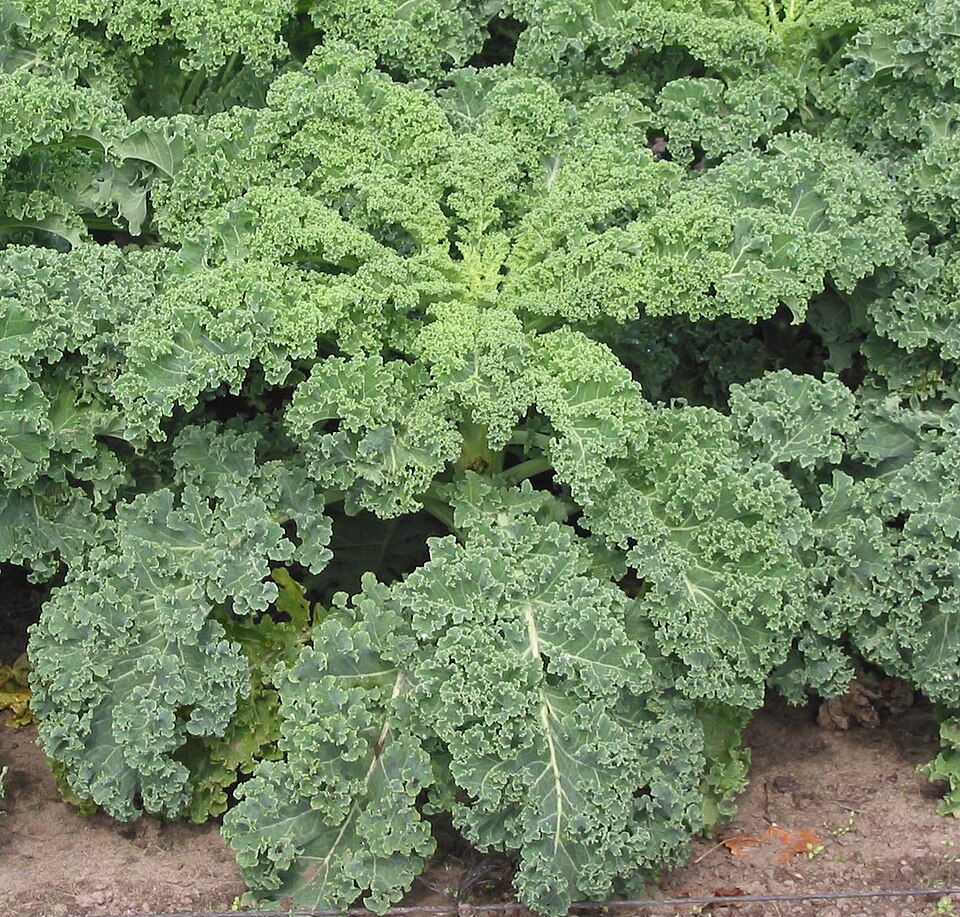
Kale
Curly Kale, Lacinato Kale, Dinosaur Kale, Red Russian Kale, Siberian Kale
One of the most cold-hardy vegetables — flavor improves after frost. Harvest outer leaves from bottom up; plant produces for months. Start transplants 6 weeks before first frost for best fall/winter harvest. Pest pressure is highest in summer; fall plantings often cleaner. Water consistently to prevent tough, bitter leaves.
- Germination
- 5–10 days
- Soil temperature
- 7–29 °C
- Harvest after sowing
- 50–70 days
- Spacing
- 30–45 cm
When to plant kale
Sow outdoors 2–4 weeks before your last spring frost.
Dashed line: typical last spring frost in zone 7 (Apr 5). Zone dates are averages; most of the UK is zone 8–9, central Europe 6–7 and the Baltics and Scandinavia 4–6. In the app, Tomatograph uses your garden's own frost dates.
How to grow kale
- 1
Sow
Sow 6 mm deep 2–4 weeks before the last frost, or in midsummer for an autumn and winter crop. Thin to 30–45 cm apart.
- 2
Feed
Side-dress with compost or a nitrogen feed midway through the season to keep new leaves coming. Water steadily; drought makes leaves tough.
- 3
Protect
Caterpillars and aphids are worst in summer. A net or fleece keeps cabbage white butterflies off, and autumn crops usually stay cleaner.
- 4
Harvest
Pick outer leaves from the bottom up from about 50 days, leaving the centre to keep growing. Flavour sweetens noticeably after the first frosts.
Growing conditions
Light
Full sun
Water
Medium water
Temperature
-6–27 °C
Frost tolerance
Frost-hardy — tolerates frost
Days to maturity
50–80 days
Plant spacing
45 cm
Ideal soil pH
7–7.5
How Tomatograph watches your kale
Tomatograph checks your local forecast every morning and only speaks up when one of these applies to your garden.
- First frost within 14 daysReminder to mulch the roots before winter.
- 3 days at 35 °C or aboveHeat-wave alert while plants are flowering or fruiting: shade and water early.
- Humidity above 80% for 48 hoursCheck for black rot, which thrives in those conditions.
- Within a week of maturityHarvest-window reminder based on when you planted.
Kale questions
- When should I plant kale?
- Sow outdoors 2–4 weeks before your last spring frost.
- How long do kale seeds take to germinate?
- Usually 5–10 days at a soil temperature of 7–29 °C.
- How long until I can harvest kale?
- About 50–70 days after sowing, depending on variety and weather.
- How far apart should I plant kale?
- Allow 30–45 cm between plants.
- What grows well with kale?
- Good neighbours include onion, garlic, carrot, beet.
Growing guide written by Tomatograph. Planting figures from openplantdb (CC0 1.0). Zone frost dates are averages from openplantdb (CC0 1.0).